WHERE HUMANS AND NATURE COLLIDE

Sunday, 18 January 2015

Yards as important habitat for urban birds

We often think of the term land management as describing large-scale activities that are carried out by groups such as government bodies and NGOs--the creation of dams, for example, or the restoration of forests and the reintroduction of species. However, studies are increasingly making it clear that individual landowners--even those whose land only comprises a few square meters of lawn stretching out to the sidewalk--can have significant impacts on local wildlife. This is particularly true when those individuals live in proximity to each other, so that their many small patches of land add up to a larger mosaic of potential habitat.

This has been highlighted by a recent study conducted in residential neighborhoods in Chicago, Illinois--one of the biggest cities in the United States. Focusing on homes located near some of the city's nearly 70,000 acres of forest preserves, a research team from the University of Illinois explored whether the richness of local bird communities might be impacted by characteristics of yards located within one kilometer of the forest edge. They also investigated which yard features were most influential, and whether the impacts of these traits depended on the birds' natural history characteristics.

Some of Chicago's many suburbs. Image courtesy of
Some of Chicago's many suburbs. Image courtesy of Charles Tilford.

The research team visited 25 different sites around the city; all study areas were adjacent to preserves found along the Chicago River, the DesPlaines River, and their tributaries. In each study site, an observer conducted two bird surveys during the breeding season--the time of year when richness tends to be highest because both migrants and non-migrants are utilizing the habitat. A total of 36 species were recorded during the study; the mean number per site was 16, though some areas had as few as 11 and others had as many as 21. Twenty of the observed species were migratory, 12 were permanent residents, and 4 were non-natives--including the house sparrow, which was one of the four most common species (the others being American robins, American goldfinches, and northern cardinals).

Across all the neighborhoods, over 900 residents responded to a questionnaire designed to assess whether their yards contained wildlife resources (including features such as plants with berries, bird feeders, and brush piles); the survey also collected data on backyard activities. Of the 11 wildlife resources listed in the questionnaire, the average yard had about six. Over half of respondents (55%) reported having vegetation with fruit or berries, and 34% had a bird feeder; of this latter group, 81% indicated that the feeders were filled for at least a few days each month.


American goldfinches, enjoying seeds at one of the 11 wildlife resources considered in this study--a bird feeder. Image courtesy of Wikimedia.

Six yard characteristics seemed to be particularly important for birds. The one with the biggest impact was trees--both the presence of trees in general and a high ratio of evergreen to deciduous species. These two features probably had such a positive effect on bird richness because a tall canopy and increased structural complexity offer more places in the habitat for roosting, nesting, hiding, and foraging. The other important vegetative features were plants that provide fruits and berries--both of which offer a natural source of high-energy food to foraging birds. Features with negative impacts included, unsurprisingly, the presence of insecticides, dogs, and outdoor cats--the last of which can reduce richness both by acting as a deterrent and through direct predation. The effect of outdoor pets was particularly noticeable on migratory birds, which were found on the transects with the lowest numbers of both cats and dogs; these birds also clearly preferred areas with more trees (especially evergreens), fruits and berries, and an overall higher number of wildlife resources.

To assess larger-scale habitat patterns within each neighborhood and across the landscape as a whole, the team put together a second dataset using remote sensing techniques. Within neighborhoods, they looked at percent canopy cover and vegetation within 50 m of the transect; across the landscape, they measured amount of open space, percent canopy cover, and distance to nearest river. These variables were important for assessing the relative impacts of yards, neighborhoods, and landscapes on avian richness. The researchers accomplished this by building seven different mathematical models--one each describing yard, neighborhood, and landscape values; three with the different pairs of those terms; and then a final model with all three terms combined. They then looked to see which model best explained the number of native birds found in the habitat.


Evergreen trees, and the presence of trees in general, had a positive effect on avian richness. Image courtesy of Overlook Circle.

The best model was the one that incorporated only the data on yards--values that had been calculated by collecting survey responses, extrapolating to fill in the blanks that were left by non-responders, and then creating aggregate scores representing, cumulatively, all the private landowner space within the neighborhood. Overall, yard characteristics explained 42.3% of all variance in bird richness--a remarkably high value for an ecological study, given the vast number of other environmental features (e.g., soil characteristics, local fluctuations in humidity and rainfall, disturbance events, windspeed, temperature, and so on...) that have to go un-measured for logistical reasons.

Taken together, these findings clearly show that the design and management of individual yards can have noticeable impacts on native birds in residential areas--probably not just in Chicago, but likely in other urban environments as well. In addition to suggesting that landscape managers and conservationists should remember to include yard habitat when drawing up wildlife preservation plans, the study also reveals that even minor decisions by individual landowners can have significant implications for local birds.


There are lots of easy ways to make a yard more appealing to wildlife. Many bird-friendly features are low-maintenance and aesthetically pleasing. Image courtesy of Pittsburgher in UK.

This should not be seen as intimidating, but, rather, empowering. Working individually or together--via homeowners' associations, conservation initiatives, or municipal schemes, for example--individuals can turn their plots into wildlife refuges. Results from the current study suggest that planting evergreens and fruiting species might be particularly useful, though specific avian needs will likely vary from one ecosystem to the next. The authors do, however, have one word of warning to those who decide to make their yards more bird-friendly: There are many documented side effects of increased exposure to wildlife, including better health, an improved quality of life, an increasing awareness of biodiversity, and a continuing enthusiasm for conservation efforts.
--
Belaire, J. Amy et al. 2014. Having our yards and sharing them too: the collective effects of yards on native bird species in an urban landscapeEcological Applications 24(8):2132-2143.

Sunday, 11 January 2015

A little disturbance could be a good thing

When you want to maximize biodiversity in a habitat, you should aim to minimize human disturbance there--right? That's certainly the concept at the heart of many conservation initiatives, and is a tenet espoused by the majority of wildlife preservationists. There is, however, a growing literature documenting the ways in which anthropogenic influences may currently give, or have previously have given, certain communities a biodiversity boost.

This has prompted a number of researchers to seek out systems where human disturbances have occurred in a repetitive way over thousands of years. In these places, wildlife would have had the chance not only to adapt to anthropogenic influences, but actually thrive under human disturbance regimes. Exactly this scenario is described by M. Kat Anderson in her 2005 book Tending the Wild, which focuses on the ways that Native Americans interacted with the California wilderness prior to the arrival of the Europeans. A similar discussion can be found in a new review paper by the University of Montana's Stephen Siebert and Jill Belsky, who describe the ecological impacts of swidden in Bhutan.

Bhutan's Haa Valley. Image via Wikimedia Commons, courtesy of Greenmnm69.

Swidden is a slash-and-burn technique used to open up forested areas for agricultural activity. Although swidden had disappeared from Bhutan by 1997, it was previously widespread throughout the country; as many as 200 million swidden farmers are thought to continue the practice throughout the remainder of the eastern Himalayas. Two types of swidden were common: tseri, in which crops were grown for 1-2 years before the field was left to grow over with trees and shrubs for 2-8 years; and pangshing, in which crops were grown for 2-3 years before the field was left to grow over with grass for 6-20 years. Tseri was typically used to produce maize, millet, rice, and vegetables, and could be found at lower altitudes; pangshing was better for wheat, buckwheat, barley, and greens, and was used at higher altitudes. Another major difference between the two techniques is the amount of disturbance required to prepare and tend fields. During tseri, disturbance was minimal because plowing was infrequent and crop maintenance was performed by hand; during pangshing, the top 6 cm of soil were removed, dried, and burned.

If you think these techniques sound fairly invasive, then you're not alone. The Bhutanese government, wanting to preserve the amazing biodiversity that can be found in its country, passed the Bhutan Forestry Act in 1969. This spelled the beginning of the end for swidden, which many people viewed as antiquated, dangerous, and ecologically unsound. However, it may have provided a service to a variety of wildlife species that needed more sunlight than thick tree canopy allowed into the forest, but also more cover than was provided by completely open meadows. In other words, swidden may have acted as an intermediate disturbance--something more intense than, say, the toppling of a single disease-ridden tree, but less intense than the felling of a whole hillside's worth of trees during a mudslide.


A patchwork habitat resulting from swidden. Here you can see forests in multiple stages of succession, fallow fields, and current growth of rice crops in a swidden landscape in Yunnan Province. Image courtesy of Wikimedia Commons.

Swidden farmers left in their wake a variety of patches of different ages--and, therefore, at different stages of succession. The entire landscape would have been a mosaic of areas with closed canopies, open canopies, and everything in between. These conditions would have provided habitat for shade-lovers, sun-lovers, shy species that prefer to stay hidden in the undergrowth, and bolder ones not afraid to venture out into the open. From a single habitat--forest--the swidden farmers were creating multiple types of new habitat, each with its own niches. This, in turn, would have facilitated biological heterogeneity--probably not just in terms of the number and type of species present, but also the roles of those species in the local food web, and the functions that the entire ecosystem could collectively perform.

It's difficult to know for sure, because swidden vanished in Bhutan over 30 years ago, and wasn't well quantified before that time. As a result, the authors can't make a clear before-and-after comparison that would allow them to see whether biodiversity levels have dropped since the discontinuation of swidden. (With proper permission, however, it would be possible to investigate this experimentally.) In other countries where swidden is still used, researchers have noted that fallow plots provide habitat for different types of species than those found in the adjacent forest; as a result, the swidden-and-forest patchwork is more biodiverse than tracts of uninterrupted forest alone. We also know that fallow-type habitats are used by sambar deer, wild pigs, and gaur--potential prey items for tigers. This suggests that swidden could facilitate the coexistence of predators and humans even in disturbed, densely populated areas.

Ironically, the curtailing of swidden has not led to a uniform decrease in disturbance across Bhutan's forests, some of which are shown above. Some areas are protected from human activities, but other areas have been subjected to intense logging efforts, which may, over the long run, be more ecologically harmful than traditional slash-and-burn practices. Image courtesy of Christopher J. Fynn.

The best way to know this for sure is to explore the possibility using rigorous scientific methods. That's one of the reasons the authors have used Bhutan as a case study. They suggest that the country missed a trick by outlawing swidden without collecting more data and thinking about the situation more critically. Their hope is that conservationists and policy makers will do better elsewhere--not just in places with swidden practitioners, but in any area where humans continue to use traditional land management techniques that have been employed for thousands, if not tens of thousands, of years.

Although we tend to think of humans as separate from nature, we do, in fact, have a long history of interacting with species, communities, ecosystems, and entire landscapes; removing us from the equation may have unintended consequences. The authors advise us to keep that in mind, and to consider the possibility that a little bit of disturbance might actually be a good thing--both for humans and for wildlife.
--
Stephen F. Siebert and Jill M. Belsky. 2014. Historic livelihoods and land uses as ecological disturbances and their role in enhancing biodiversity: an example from BhutanBiological Conservation 177:82-89.

Sunday, 4 January 2015

Neolithic farming at the northern frontier

The high northern latitudes have been inhabited by humans since the end of the last Ice Age, approximately 12,000 years ago. Conditions that far north, where the Earth's circumference is about half that at the Equator, are extreme. On the 60th parallel north, for example, the sun is visible for just under 19 hours on the summer solstice, but only for about 6 hours during the winter solstice. Although temperatures may soar above 30°C in exceptional years, the average daily mean is closer to a chilly 6°C (depending on your exact location along the parallel), with record lows in the -30's--and, of course, you can expect at least a meter of snow in the winter. In other words, this is not an easy place to live even now, with our modern conveniences; it's hard to imagine what it must have been like for the region's earliest settlers, who eked out a living by hunting, fishing, and gathering.


A sampling of Neolithic tools. Image courtesy of Wikipedia Commons.

At some point, these intrepid northern colonizers began farming, making use of techniques originally developed in the Fertile Crescent 11,000 years ago. Above the 60th parallel, however, farmers were more vulnerable to climatic stochasticity; archaeologists have uncovered settlements that appear to have been abandoned after the environment became too hostile. In northwestern Europe, exposure to the Gulf Stream allowed Early Neolithic people to initiate farming economies that last to this day. Elsewhere on the continent, however--in Finland, for example--the low average temperature, persistent snow cover, and not-infrequent appearance of summertime snow and ice combined to diminish vegetation periods and make farming a more challenging endeavour.

Until recently, it has been difficult to pinpoint exactly when early Finnish settlers achieved domestication, since there is very little evidence from prehistoric times; the region's acidic soils took care of the majority of useful artifacts long ago. However, those same conditions are favorable for the preservation of biomolecules harvested from the few remaining pieces of ancient ceramic cooking vessels. Analysis of these fragments--via techniques such as high-temperature gas chromatography, mass spectrometry, and ion monitoring--allows researchers to determine the composition and structure of the molecules, and to look for pre-identified biomarkers. Cumulatively, these characteristics can be used to determine whether the vessels are saturated with aquatic fats (indicating storage of fish and other seafood), terrestrial fats (from species hunted on land), and dairy fats (from domesticated livestock).


Examples of pottery from the Corded Ware period; these pieces date to ca. 2500 BC. Image courtesy of Wikipedia.

Out of a collection of 70 prehistoric fragments unearthed at sites across southern Finland, an interdisciplinary team of researchers was recently able to isolate 19 that were suitable for just such an analysis. The pottery was representative of a range of prehistoric eras, from the Comb Ware period (ca. 6000-4300 years ago) through the Corded Ware (ca. 4800-4100 years ago) and Kiukainen Ware (ca. 4400-3500 years ago) periods, all the way to the Early Iron Age (ca. 2500-1600 years ago).

The earliest molecular samples (dated to approximately 3900-3300 BC) were predominantly marine in origin, indicating a heavy reliance on fishing; the ceramic fragments themselves may have come from vessels used for cooking, storage, or even transport. On the other hand, residues from pottery shards dating to approximately 2500 BC were from terrestrial ruminants. Though they could have come from either wild or domesticated stock, there was evidence of milk fat--indicating that the settlers had begun farming and were now heavily dependent on land animals despite their relative proximity to the coastline. Interestingly, the final Neolithic samples, dating to the Kiukainen Ware period, contained a mixture of terrestrial and aquatic compounds, suggesting that local climate changes may have required a diversification in subsistence techniques. By the Early Iron Age (approximately 1200-500 BC), however, agricultural intensification seems to have allowed population growth and a renewed focus on farming; pottery fragments from this time yielded only dairy fats.


Iron Age pottery (in this case, from Orkney). Image courtesy of Rita Roberts.

Although these patterns may initially seem relevant only to the small portion of researchers specializing in ancient Finnish history, they actually offer some interesting insights to the rest of us, too. For one thing, these archaeological results map nicely onto spatial patterns showing the prevalence of the lactase persistence (LP) genotype--which confers the ability to continue digesting dairy products well into adulthood. While this may be a fairly common characteristic throughout much of the developed West, it is either rare or lacking in parts of the world without a strong tradition of dairy farming. This correlation helps validate the molecular results, and also can be used to draw conclusions about gene flow in Europe. There is a SW-NE gradient of LP allele frequency in Finland, suggesting several separate waves of immigration over the past 6000 years. Further, low LP frequencies in some parts of the eastern Baltic indicate that this region may have acted as a "genetic refuge" for populations who continued to lead a hunter-fisher-forager lifestyle rather than pursuing farming. Pretty amazing that all of this ancient history can be inferred from gene patterns analyzed thousands of years after the fact.

Another interesting implication of the findings is related to what they reveal about how early humans dealt with their difficult and variable habitat. The analyses suggest that animal domestication occurred in southern Finland much earlier than previously thought (ca. 2500 BC), but that use of aquatic resources lasted much longer, post-domestication, than it did in other places settled by Neolithic peoples. In fact, Late Corded Ware Finns appear to have responded to their changing environment by vacillating between hunting/gathering, farming, and some mixture of the two as required. This sort of flexibility is probably one of the major reasons why early settlers were able to maintain populations in such marginal habitat.


Miina Äkkijyrkkä is an artist and dairy farming expert who combined her two passions during a project making cow sculptures from recycled car parts. Images courtesy of the artist, via Inhabit.

The authors of the study write that, even today, "conventional" farming in this part of the world is not for the faint-hearted. A changing climate may prompt humans to push their boundaries ever northwards, but conditions above the 60th parallel will likely always be challenging. If we hope to utilize this "frontier zone" in order to increase food production and make use of the available land, we will probably have to follow our predecessors' example and demonstrate a willingness to adapt.
--
Cramp, Lucy J.E. et al. 2014. Neolithic dairy farming at the extreme of agriculture in northern Europe. Proceedings of the Royal Society B 281:20140819.

Tuesday, 23 December 2014

Tiny hitchhikers: An analysis of stowaway ants

We’ve all seen news coverage of the terrifying and destructive creatures that make their way across our borders by hitchhiking on shipments from around the world—Asian long-horned beetlesvia wood pallets, for example, or Brazilian wandering spiders in boxes of tropical fruit. These are only two of many examples worldwide, and the cumulative cost of these invasions is in the hundreds of billions of dollars as individuals, organizations, and governments race to contain outbreaks that can damage property, reduce ecosystem function, and threaten human health.

While some invaders are easy to spot and identify, others, such as ants, may go unnoticed thanks to their diminutive size and furtive nature. In fact, five different types of ant are listed among the world’s top invaders, and over a hundred other ant species are known to have expanded their ranges thanks to global trade activities. One recent study suggested that 147 varieties of ant have been transported—and transplanted—to date, but this is likely to be an underestimate given than more than 200 species have been intercepted at the borders of the USA alone.


Asian longhorned beetle, which has caused the destruction of tens of thousands of trees across North America. Image courtesy of the CISR.

The uncertainty surrounding this issue prompted a team of Spanish and American researchers to undertake a global survey in order to more accurately estimate the number of ant species arriving, and establishing viable populations in, temperate habitats. Further, they wanted to explore whether these patterns were influenced by the geographical origins of the exotic ants—were they, for example, more likely to do well in habitats like those from which they came, or did they thrive in entirely different types of ecosystem?

The research team focused on data from the USA, New Zealand, and Holland—three countries characterized by high levels of shipping activity and excellent records of invasive species sightings. By employing a range of species richness equations, the researchers were able to use invasive ant presence/absence data to estimate the total number of introduced and established species in each of the three countries.

Estimates varied depending on which equations were used; for example, the total number of introduced species worldwide ranged from a low of 366 to all the way up to a high of 2027. The variation is a result of differences in how each equation deals with species that had very low detection levels. To deal with this uncertainty, the researchers calculated a mean across all the estimates—a figure that was often towards the lower to middle portion of the scale, meaning that the resulting analyses would likely be a conservative estimate of ant invasions in the focal regions.


The tawny crazy ant, a species that has invaded the Houston, Texas area of the USA. Image courtesy of Mother Nature Network.

It turned out that many of the invasive species had been spotted only once—a pattern that was particularly obvious in the USA. This suggests that there is a large diversity of exotic ants being transplanted around the world. Further, the richness estimates revealed a surprisingly high rate of introductions. Nearly 900 species are likely to have been transplanted globally, even though we’ve only observed and confirmed about 300. In North America, which is home to approximately 1000 types of ant, the number of invasives could almost equal the number of natives.

Not all of the exotics are likely to become established residents of their new ecosystems; the study estimated that just under 600 species found a way to embed themselves and set up colonies. This number is nearly 5 times higher than what has actually been observed during surveys, and represents nearly two-thirds of all introductions.

Most of the invasive species are Neotropical, with fewer coming from the Palearctic, Indo-Malay, and Australasian regions. The US was particularly hard hit by Neotropical ants, which made up the majority of both introductions (58%) and establishments (51%). The other two countries surveyed were most inundated from species from their own regions: most of Holland’s stowaway ants came from the Palearctic, while most of New Zealand’s came from Australasia. Interestingly, there were no significant biogeographical differences between the introduced and established ants within each study region, indicating that all species were equally likely to thrive once they had reached their new home.

Overall, the analyses suggest that approximately 1/14th (or 7%) of the world’s estimated 13,000 species of ants have been shipped to new habitats at some point. The authors admit that these estimates may be slightly inflated by the high rates of importation into the US, which offers more ant habitat than the other two countries examined here—both because it is physically larger and because it contains a greater variety of ecosystem types. However, results were similar even when additional countries were added to the sample, suggesting that the reported patterns are likely accurate reflections of global ant introductions.


Range of the red imported fire ant, a global pest. Image courtesy of the USDA.

There are probably two main reasons why stowaway ants are most successful within their own biogeographical regions. First, they are more likely to benefit from “climate matching”, or similarities between climatic conditions in their native and adopted countries. Second, there is greater “propagule pressure”—a larger number of migration opportunities thanks to simple physical proximity and repeated exposure.

That’s not exactly a surprising result, but probably a useful one nonetheless if we want to improve our ability to locate, identify, and prevent impending invasions. After all, ants can play a critical role in ecosystem function, and an imbalance in local myrmecofauna could have serious implications for the health of local habitats—or, at the very least, could prove to be an expensive and sometimes painful annoyance, as anyone who has dealt with a red imported fire ant could tell you.

Given the non-random nature of ant introductions, the authors suggest that we should develop targeted strategies for monitoring shipping routes (especially from the Neotropics). Now that we know where the ants end up, it would also be helpful to have a better understanding of where they originate. This will require further studies of introduced and established ant populations in other destination habitats, since the stowaways may hop on board at any number of ports—not just those in their homelands.
---
Miravete, V., N. Roura-Pascual, R.R. Dunn, and C. Gomez. 2014. How many and which ant species are being accidentally moved around the world?Biology Letters 10: 20140518.

NOTE: Since the publication of this blog post, the paper has been retracted. The authors' public statement is as follows:
Herewith, we retract our paper ‘How many and which ant species are being accidentally moved around the world?’ by Verónica Miravete et al., published online on 23 October 2013 (Biol. Lett. 9, 20130540; doi:10.1098/rsbl.2013.0540). After careful examination of the original data on introduced and established ants on regions worldwide, we realized that we used a wrong list of species and omitted to include a reference (Sarnat E. (2012) North America checklist. Antkey <http://antkey.org>. Extracted 3 June 2014) in the paper. Although the main arguments and conclusions remain the same after correcting these errors, the use of the wrong version of the data affected the magnitude of the analyses conducted at the country level (in the electronic supplementary material) and, to a lesser extent, when all countries were considered together (in the main text). Therefore, we wish to retract the article. We deeply apologize for any inconvenience this publication might have caused to the readers of Biology Letters.

Sunday, 23 March 2014

Guidelines for reintroducing resurrected species

If you read National Geographic or Salon or any of a growing number of popular press publications, you have probably heard about DeExtinction--the resurrection of extinct species via the kind of molecular techniques that seemed impossibly futuristic and fictional when they were shown in Jurassic Park20 years ago. The concept first gained widespread attention thanks to the TEDx program, and its application has since been discussed in relation to everything from passenger pigeons to woolly mammoths.


A recent National Geographic article asked whether woolly mammoths might eventually roam the Earth again. Image courtesy of the NHM.

Unsurprisingly, opinions on DeExtinction vary widely; the idea of bringing back long-lost species seemingly inspires equal measures of fear, excitement, and curiosity. Another characteristic, evident in a recent Trends in Ecology and Evolution paper written by an international trio of zoologists, is caution. The researchers point out that DeExtinction is, most likely, an inevitability. Given this, they suggest that humans proceed only after doing a bit of soul-searching and asking themselves "whether DeExtinction can assist conservation efforts, and what might be the relative risk and benefits of species resurrections."

At the heart of their discussion is the idea that the whole point of DeExtinction efforts is to return lost species back into the wild; as a result, each resurrection event should ultimately be accompanied by at least one subsequent translocation and/or reintroduction--management techniques for which the International Union for the Conservation of Nature (IUCN) has provided detailed guidelines. The aim of the current paper is to highlight how those guidelines can be re-framed as a series of ten questions about the past, present, and future of each resurrected species and its habitat. The resulting answers can act as a "filter" for selecting the organisms for which DeExtinction is likely to be most relevant and successful.


The thylacine, an extinct Tasmanian marsupial, was featured on the cover of this month's Trends in Ecology and Evolution as the face of DeExtinction. Image courtesy of Wikipedia.

All ten questions can be answered with either a "yes" or a "no," making decisions relatively clear-cut. As the authors point out, a negative response might indicate a doomed project or, alternatively, simply highlight the need to do additional research before proceeding. Importantly, the questions focus not only on biological and ecological issues associated with the reintroduction efforts, but also on potential social, economic, and legislative implications.

So what are the questions? It is, perhaps, most interesting to consider them in relation to one of the three case studies that the researchers include to illustrate the usefulness of the filtering process: that of the Xerces blue butterfly. This species, native to a small portion of California, was declared extinct in 1941. Judging by the answers to the authors' proposed questionnaire, the butterfly is a prime candidate for DeExtinction.
  • Q1: Can the past cause(s) of decline and extinction be identified and addressed? Yes. The butterfly went extinct because of habitat loss and over-harvesting by collectors. Dune restoration, and banning of additional collection efforts, could prevent a repeat extinction event.
  • Q2: Can potential current and future cause(s) of decline and extinction be identified and addressed? Yes.Assuming that no new threats emerge--and that climate change does not have a negative impact on either the butterflies or their habitat--the techniques proposed in response to Q1 should be sufficient to protect the butterfly post-reintroduction.
  • Q3: Are the biotic and abiotic needs of the candidate species sufficiently well understood to determine critical dependencies and to provide a basis for release area selection? Yes.Species composition, soil characteristics, and light conditions within the butterfly's habitat have been well documented.
  • Q4: Is there a sufficient area of suitable and appropriately managed habitat available now and in the future? Yes.The dunes originally inhabited by the species no longer exist, but alternative habitats can likely be created in a nearby park--however, the suitability of these may be compromised by climate change.
  • Q5: Is the proposed translocation compatible with existing policy and legislation? Yes.There are no known relevant policies.
  • Q6: Are the socioeconomic circumstances, community attitudes, values, motivations, expectations, and anticipated benefits and costs of the translocation likely to be acceptable for human communities in and around the release area? Yes.Public support is likely to be widespread, as evidenced by the fact that a nonprofit conservation group is named after the butterfly.
  • Q7: Is there an acceptable risk of the translocated species having a negative impact on species, communities, or the ecosystem of the recipient area? Yes.No negative impacts anticipated.
  • Q8: Is there an acceptable risk of pathogen-related negative impacts to the resurrected species and the recipient system? Yes.No harmful impacts anticipated.
  • Q9: Is there an acceptable risk of direct harmful impacts on humans and livelihoods, and indirect impacts on ecosystem services? Yes.No harmful impacts anticipated.
  • Q10: Will it be possible to remove or destroy translocated individuals and their offspring from the release site or any wider area in the event of unacceptable ecological or sociological impacts? Yes.Because the butterflies are dependent on a particular type of habitat that is not widespread, and because the insects emerge en masse in a single brood each year, it would not be difficult to collect them if needed.

The Xerces blue butterfly, shown here in a specimen collection housed in a museum, went extinct because of habitat loss and over-harvesting by collectors. Image courtesy of Wikipedia.

As evidenced by the case study evaluation of Yangtze River Dolphins, it is not even necessary to answer every single question on the list; where the first few questions elicit a negative response, it is immediately clear that there is too much uncertainty associated with the reintroduction to make it worthwhile. This may be a permanent state or may simply indicate that additional research, management, and/or policy goals need to be met before proceeding with DeExtinction efforts.

The authors conclude by acknowledging that there are many reasons why DeExtinction is appealing: In addition to giving people an opportunity to "[correct] past human wrongs" and to view fascinating wildlife in the flesh, the resurrected species might also provide any number of ecosystem services. Given these benefits--real or perceived--it seems highly likely that it is only a matter of time before DeExtinction is attempted. Recognizing this, the researchers advocate the early use of their planning criteria in the hopes that this simple question-and-answer technique "might eliminate several high-profile candidate species and, thus, avoid time, expense, animal welfare concerns, and the raising of false public expectations."
---
Seddon, P.J., Moehrenschlager, A., and Ewen, J. 2014. Reintroducing resurrected species: selecting DeExtinction candidates. Trends in Ecology and Evolution 29(3):140-147.

Sunday, 16 March 2014

A century of anthropogenic influences on black bear diets in Yosemite National Park

One of the main reasons people visit natural areas such as national parks is to have close encounters with free-living animals. In many such places, humans have developed a bad habit of using food scraps to either draw particular animals closer, or to create places where easy access to appealing foods ensures a reliable stream of animal visitors. Sometimes--as in the case of unattended trash bins in parking lots and behind hotels--there is no intention to feed the animals, but it happens anyway. Regardless of the exact circumstances, this sharing of food can be detrimental both to individual organisms and entire ecosystems; as a result, parks often devote a great deal of time and money to management practices designed to minimize wildlife access to anthropogenic food items.

Whether or not these management schemes work is another question--one at the heart of a recent research project conducted by an international team of scientists working in California's Yosemite National Park. The researchers used both museum specimens and samples collected from living animals to explore changes in the diets of American black bears (Ursus americanus) in Yosemite between 1890 and 2007. This 117-year period encompasses four major anthropogenic disturbance regimes during which bears had access to varying levels of artificially introduced fish and food scraps; during these regimes, there were also differences in the degree to which bears were either encouraged to eat, or actively prevented from eating, these food items.

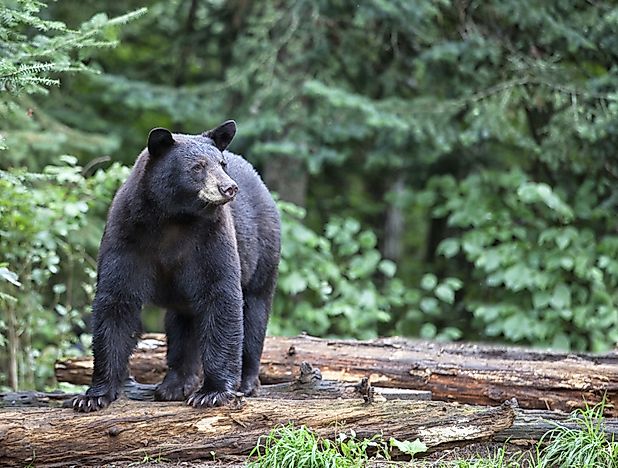
An American black bear (Ursus americanus). Image courtesy of the World Atlas.

Because the researchers had no way of observing all the feeding behaviors of every bear included in the study (especially those that lived in the 19th century) they relied on stable isotope analysis to provide information on which types of foods comprised the bears' diets. Stable isotopes are versions of atoms--in this case carbon and nitrogen--that have extra neutrons but do not undergo radioactive decay. Relationships between "normal" and "heavy" isotopes (12C vs. 13C, 14N vs. 15N) vary among different food sources in different regions, and therefore can be used as a sort of food fingerprint. This information can be extracted from a variety of animal products, including fecal samples, blood plasma, and--as in the current study--bone and hair.

Unsurprisingly, the scientists found that the isotopic composition of Yosemite bear tissues has changed over time, and that this pattern is associated with variations in the consumption of anthropogenic foods. Between the first and second focal periods (1890-1922 and 1923-1971), for example, they saw an increase in 15N associated with the availability of non-native fish in Yosemite-based hatcheries; closure of the last hatchery in 1956 resulted in a subsequent decrease of 15N.


Black bear eating anthropogenic food out of a(n unsecure) food locker at a Yosemite campsite. Image courtesy of the U.S. National Park Service.

Carbon isotopes, on the other hand, were fairly stable early on, but rose significantly during the second and third (1972-1998) study periods. This is predominantly associated with the closure of bear-feeding platforms. Bears that had developed a taste for anthropogenic foods went searching for them at their source, in concession areas and campgrounds. This habit not only increased consumption of 13C, but also led to a variety of human-bear conflicts that sometimes resulting in the killing of "problem" animals.

At the beginning of the fourth focal period (1999-2007), the U.S. government initiated an annual funding scheme designed to improve human-bear relations. Bear-proof trash and storage receptacles were installed throughout Yosemite, outreach programs were designed to teach visitors about the hazards of feeding bears, and particularly aggressive bears have been hazed, relocated, and even occasionally killed. The isotope analysis suggests that these efforts have been effective: Both 15N and 13C levels decreased between the third and fourth period, and are fairly similar to the (more or less) pre-anthropogenic-disturbance values measured at the very beginning of the first focal period.

Yosemite National Park. Image courtesy of Wikimedia Commons user Diliff.

Indeed, plants and animals--black bears' natural food sources--currently make up the majority (64-92%) of most Yosemite bears' diets. However, a few sneaky individuals are still finding ways to dine out on anthropogenic foods, as evidenced by the fact that 8-36% of some animals' meals are coming from human sources.

Preventing these indulgences (not to mention the cravings that drive them) would be beneficial to humans and bears alike. Particularly aggressive bears do occasionally hurt humans and their belongings: Over the past 20 years, there have been 12,000 reported conflicts, 50 injuries, and approximately $3.7 million in property damage. Bears, like other wildlife consuming anthropogenic foods, may also be susceptible to long-term health problems associated with high cholesterol and fat intake--though there is also evidence that high-calorie, high-protein anthropogenic foods increases reproductive success over the short term.

Yosemite has a long history of human-bear interactions, as shown by this archival photo. Image courtesy of the National Park Service, via UPI.

Perhaps even more worrying is our lack of knowledge about the potential ecosystem-level effects of bears' dietary fluctuations. Changes in feeding preferences can destabilize food webs and disrupt vital ecosystem processes such as seed dispersal and nutrient cycling. Although modern bears may be returning to "normal" eating practices, their behaviors over the past several decades may have had significant long-term impacts on Yosemite and the wildlife that dwell within it. The researchers urge further study, both here and in other anthropogenically impacted systems, to improve our understanding of whether, and how, human nutrients may shape even those landscapes that we often regard as being more or less "undisturbed" wilderness.
---
Hopkins III, J.B., Koch, P.L., Ferguson, J.M., and Kalinowski, S.T. 2014. The changing anthropogenic diets of American black bears over the past century in Yosemite National Park. Frontiers in Ecology and the Environment 12(2):107-114.

Saturday, 1 March 2014

Feast, famine, and the evolution of the human diet

It's not easy to keep track of all the different diets out there, but you still may have heard of the "fast diet," also known as "intermittent fasting" or the "5:2 diet." Regardless of what you call it, this popular method of slimming down is based on the assumption that it is normal and healthy for our bodies to periodically experience food shortages. Another popular eating regime, the Paleo diet, has been advocated by nutritionists who believe that modern humans should restrict their foods to those available to, and commonly eaten by, our ancient ancestors. This advice is grounded in the idea that our genomes are not very different from those of our predecessors, and are therefore designed not to facilitate the processing of frequent and/or large quantities of "calorically dense foods," but, instead, of only the freshest and most natural ingredients. Both the intermittent fasting and Paleo diets are thought to promote not only weight loss, but also improvements in general health.


Examples of what Berbesque et al. refer to as "calorically dense foods" (image courtesy of Sott.net)

One of the reasons that eating regimes like these are so appealing is that they sound as though they are grounded in fact--in data collected by doctors, anthropologists, and evolutionary biologists. In reality, however, the logic behind these diets relies on many assumptions. One of these, the focus of a recent project conducted by researchers at the Universities of both Roehampton and Cambridge, is the idea that our hunter-gatherer ancestors frequently experienced food shortages--and even famines. In addition to prompting many a diet, this concept has also influenced theoretical models about the evolution of cognition and various life history traits in humans.

But what if early humans didn't experience high food insecurity--or, at least, what if the food insecurity they did experience is not that different from what modern agriculturalists are periodically subjected to? Unsurprisingly, this is a question that researchers have previously asked, but their analytical methods may not have allowed them to draw truly informed decisions. For example, past studies have focused predominantly on only a handful of societies that experienced rapid increases in diabetes and obesity rates after swapping traditional diets for those that were more "westernized." Further, focal groups were characterized according to early ethnographical reports that may not have accurately or fully documented the relationships between various societies and their dietary practices. Finally, and perhaps most importantly, previous work has tended not to account for the fact that contemporary hunter-gatherer groups predominantly live in marginal habitats, and that habitat, in general, is hugely influential in determining both the availability of food and the relationship between locals and the choices they make about sustenance.


Samoan data has been included in previous dietary studies because of increases in type II diabetes and obesity in Samoa since the switch from a traditional diet to one that is more "westernized" and agriculture-based (Image courtesy of Faifeau).

Cumulatively, these flaws prompted the researchers behind the current study to conduct a new set of analyses designed to more rigorously "explore relationships between subsistence and famine risk." Specifically, they wanted to make three comparisons: first, between hunter-gatherers in warmer (more productive) and colder (more marginal) habitats; second, between hunter-gatherers and agriculturalists, regardless of habitat; and, third, between hunter-gatherers and agriculturalists, with habitat quality controlled for.

Rather than focusing on only a subset of societies at opposite ends of the dietary spectrum, the researchers utilized a global sample including 186 different "cultural provinces"; this included 36 hunter-gatherer societies and incorporated data on eight different variables that each measured a different aspect of famine. They used two metrics to account for habitat quality. The first was effective temperature (ET), which is derived from measurements of both the warmest and coldest temperatures of an area, and also reflects plant growth (with lower ETs generally indicating less abundant vegetative resources). The second habitat variable was net primary productivity (NPP), higher values of which are associated with greater availability of food items.

As you might expect, groups living in warmer climates experienced significantly less famine--and also less persistent famines--than those living in colder areas. Because of this, the researchers decided that their subsequent two analyses would only include data from groups living in habitats with an ET at or above 13 degrees C; this ensured that the analyses were comparing apples with apples, so to speak. Their comparison of agriculturalists and hunter-gatherers revealed that food conditions were more favorable for the latter than for the former. Hunter-gatherers living in warm climates were particularly well off, though both types of society were equally likely to face periods of short-term and seasonal starvation (neither of which was very common). Similar patterns were found when this analysis was re-run with both ET and NPP included in order to control for overall habitat quality. Taken together, these results indicate that--contrary to popular belief--hunter-gatherers are actually less likely than agriculturalists to experience famine.


The Paleo diet aims to emulate the eating practices of our ancient predecessors, both in terms of quantity and type of food items eaten. However, hunter-gatherers likely had access to more foods, and to a wider variety of foods, than we give them credit for--though that is no reason to avoid a diet heavy in vitamin-containing ingredients (image courtesy of Just Science).

In other words, regularly skipping meals and eating extremely low-calorie diets may not faithfully mimic an actualPaleo diet; rather, this way of eating may more accurately reflect conditions in agricultural societies that periodically experience food shortages associated with drought and flooding. Faced with these sorts of environmental instabilities, hunter-gatherers tend to have more freedom to relocate to more productive habitats. This sort of cultural adaptability was also highlighted by the comparison between warm-climate and cold-climate hunter-gatherers, the latter of which engaged in a variety of behaviors (e.g., development of specialized hunting technology, food storage, infanticide, and trade) that maximized survival during times of want.

Given the great importance of culture in mediating the relationships between humans and food, the authors point out that there is no reason for other researchers to assert that our modern food-related health crises are necessarily related to genes. This is the idea behind the "thrifty genotype" theory, which suggests that a subset of our hunter-gatherer ancestors possessed a certain set of genes that conferred better survival and reproduction rates in the face of unpredictable feast-famine cycles.
There may, indeed, be such a genotype, but it is not necessarily an ancient development (it could have evolved since the dawn of the modern agricultural age) and it need not be the only explanation for the prevalence of diabetes and obesity in western societies. Equally--if not more--logical is the idea that some cultures began to favor both "immediate return behavior" (use of resources as soon as they become available, as generally observed in hunter-gatherers living in warmer climates) anda taste for high-calorie foods.


It may be the case that our dietary and lifestyle choices--rather than our genes--should get most of the blame for our current struggles with obesity and weight-related health problems (image courtesy of NewsMax).

Centuries ago, when humans were more active and had fewer resources right at their fingertips, this pairing of behaviors would have been adaptive; today, say the authors, it is a liability. They don't go on to make any recommendations about modern weight loss regimes (after all, they aren't those types of doctor), but it isn't hard to read between the lines: Though the intermittent fasting and Paleo diets have undoubtedly worked for some people, they probably aren't as scientifically grounded as some of their advocates might like you to believe.
---
Berbesque, J.C., Marlowe, F.W., Shaw, P., and Thompson P.  2014. Hunter-gatherers have less famine than agriculturalists. Biology Letters 10:20130853 (online advance publication).