WHERE HUMANS AND NATURE COLLIDE

Monday, 5 December 2011

Making agriculture more environmentally sound

When the global human population recently expanded to 7 billion people, there was renewed discussion of how we will manage to produce all of the items that we directly and indirectly need from agricultural crops--including food for ourselves and our livestock, fibers, fuel, and various tree-based products--while also maintaining healthy ecosystems and making land available for other purposes such as housing and recreation. It may seem like a tall order--especially given the important but unpredictable influence of continued climate change--but a new review paper published in Frontiers in Ecology and the Environment outlines how plant breeders may hold the key(s) to promoting "harmony between agriculture and the environment."

The paper was written by collaborators from several institutions, including The Samuel Roberts Noble Foundation, the University of Illinois, Cornell University, The Land Institute, The US Forest Service, Texas A&M University, the US National Arboretum, New Mexico State University, and the National Institute of Food and Agriculture. The main focus of the review was to emphasize how, throughout agricultural history, plant breeders have continually played an important role in ensuring that crops were available to meet the various and changing needs of growers and consumers. As a society, we may previously have been more interested in maximizing yield and the size of individual plants or plant products, but now our goals have shifted; we are interested in preparing our crops for continued climate change, developing more sustainable practices, finding crops that can grow in "marginal" agricultural areas, and promoting ecosystem services such as erosion prevention and promotion of nutrient recycling.


The authors argue that small-scale breeding efforts, led by private and non-profit groups--in particular, education and research institutions--will be key for developing new cultivars of interest. This is because industrial researchers may devote 10 or more years to developing and testing plant cultivars before they are released to growers; thus, they are less effective at generating the sort of "alternative" crops that will be needed to meet new agricultural demands. A focus on small-scale institutes where a variety of knowledge can be shared between junior and senior researchers will ensure that breeders have the fine-tuned biological training that will not only provide them with the ability to create new plant breeds, but also the skills to determine what sorts of characteristics those plants should have in order to target particular environmental problems. Given the diversity of goals that we may wish to accomplish with new cultivars, the authors suggest that there could be diverse opportunities for people from many disciplines to work together; this includes ecologists, conservationists, land planners, economists, geneticists, and immunologists, to name a few. Once the new breeds are developed, the private sector can then play a role in the mass production and dissemination of the final product.

According to the authors, there are several ways in which new cultivars might improve on existing crops. First, they can be bred to have a smaller environmental footprint--for instance, by requiring fewer nutrients (such as phosphorus, which is becoming increasingly globally scarce) and water. Alternatively, it may be possible to create varieties that can be grown under more environmentally-friendly conditions--such as in mixed-species groups that mimic aggregations in natural ecosystems. Second, new cultivars could be designed to better tolerate climate change, which not only may increase the number of "extreme weather" events, but may also change temperatures, levels of precipitation, and host-pathogen relationships. Plants that are inherently more tolerant of flooding, drought, heat, frost, and disease could therefore be better equipped to deal with future environmental changes. Third, current crops do not always provide "essential ecosystem services," or, where they do, may not supply them efficiently. Thus, new breeds of crops might be developed to perform a variety of jobs, such as improving soil health, reducing erosion, preventing runoff, and maintaining biodiversity.

As useful as it may be to alter the crops themselves, the authors state that it may also be important to vary the practices associated with their development and growth. For instance, individuals investigating new cultivars should grow them under "local" environmental conditions (e.g., the conditions that the plant will experience once it reaches its designated target habitat) in order to fully ascertain whether the new breeds are suited for particular purposes. Plants will be impacted by soil conditions, temperatures, and prevalence of diseases, and may therefore react quite differently depending on the environment. It may also be possible to develop cultivars that are particularly well suited for alternative agricultural practices that vary crop rotations, planting densities, and tillage systems--each of which may be used to improve a crop's "relationship" with the environment.


The authors also recommend that breeders focus on developing plants that can be used in anthropogenic settings--urban areas, in particular--and in conservation efforts. Currently, urban areas are dominated by ornamental species that are often non-native; these plants are popular because they do so well in the harsh conditions of human-disturbed habitats. However, these species may have a number of drawbacks, such as a tendency to introduce invasive diseases, an inability to provide desired ecosystem services, and a propensity to use more water and nutrients than native species. Thus, the development of urban-friendly native cultivars could be beneficial on a number of levels. This is also true in conservation settings, where breeding efforts have been vital for creating new cultivars of endemic species, such as chestnuts and elms, that were hard hit by introduced diseases; newly-bred varieties of these plants are now being used in efforts to restore native forests.

All of these environmentally-friendly traits stem from particular genes or suites of genes. In many cases, current agricultural crops no longer contain the genetic variation needed to provide the foundation for new cultivars. Thus, breeders need access to wild-growing individuals from the same species, or to specimens that were previously placed in gene banks. This, the authors emphasize, is one of the many practical reasons why biodiversity must be maintained: With each species or variety that goes extinct, we may lose access to particular characteristics that we need for our future crops. Of course, there is always the possibility of using transgenic techniques, but the authors realize that not all consumers wish to purchase products that have been heavily genetically modified in a laboratory.

Regardless of how the new cultivars come into being, the authors are confident that plant breeding is a "powerful tool" that can place agriculture and natural environmental processes in sync--but only if a broad range of individuals, from breeders to ecologists to urban planners to policy makers, are willing to work together to "make this a reality."

---
 Brummer, E.C., Barber, W.T., Collier, S.M., Cox, T.S., Johnson, R., Murray, S.C., Olsen, R.T., Pratt, R.C., Thro, A.M. 2011. Plant breeding for harmony between agriculture and the environment. Frontiers in Ecology and the Environment 9(10):561-568.

Thanks to the following websites for providing the images used in this post:
http://trendpak.blogspot.com/2011/04/trend-of-agriculture-pakistan.html
http://mariamuir.com/2010/10/24/natures-elements-turned-into-toxic-chemicals/

Friday, 2 December 2011

The debate over assisted colonization


“Assisted colonization” (AC) may not be a household term yet, but chances are it will become an increasingly common topic over the next few years—or, at least, it should, according to scientists writing in a recent issue of the journal Frontiers in Ecology and the Environment. The main goal of the researchers, both of whom are affiliated with Seattle’s University of Washington, was not to take a pro- or anti-AC stance, but to argue that it is time for discussions about this topic to be moved out of the ivory tower and into the community at large.

Assisted colonization is a wildlife management technique whereby individuals are intentionally relocated to places outside their native ranges in an effort to protect them from anthropogenic threats. The main threat considered here was climate change, which is projected to alter some habitats so quickly that their inhabitants will not be able to adjust in time (by adapting or by moving themselves to more suitable areas, for instance). Within the scientific community, the concept of AC has been met with both praise and alarm. Some researchers feel that it is an excellent tool for species conservation, while others believe it will cause more harm than good. One particular worry is that assisted colonization efforts are merely sanctioned introductions of potentially destructive nonnative species that may have adverse impacts on local species and, potentially, entire ecological processes.


(The Florida Torreya, Torreya taxifolia. To combat the “shrinking native range” of this species, an environmental group called the Torreya Guardians has transplanted seedlings to North Carolina.)


While the authors feel that this is one of many valid and important questions, they also believe that it is time to take a step back and take a broader view of the debate. They suggest that we need to focus our attention on three activities: weighing the consequences of action versus inaction; deciding, as a society, the extent of “ecosystem engineering” that we feel is appropriate; and considering alternative approaches to AC.

The action vs. inaction debate is particularly fraught because it involves so much conjecture. Predictions about the outcomes of ACs (or lack thereof) can be informed by forecasts of climate change, data collected from previous reintroductions (for instance, of critically endangered species that are raised in captivity and then released into the wild), experiments, and historical records associated with previous climate shifts. Despite these potential sources of information, it is not always easy to identify which species are at the greatest risk, let alone determine how they might respond to, or influence, a new habitat—a habitat that, itself, will continue to change as climatic patterns shift. Furthermore, there are also moral and ethic issues to consider: Is it better to prevent the global extinction of one species even when it causes the local extinction of another, or is it tolerable to lose a single species if doing so prevents potential loss of ecosystem function at its proposed AC site?


(The Iberian lynx, Lynx pardinus, is a critically endangered species that has become “trapped” in pockets of subpar habitat in Spain. Researchers have proposed assisted colonization as a method for reducing the likelihood that this species will go extinct.)


The second issue, ecosystem engineering, revolves around the need to decide what we want for our ecosystems. They provide us with a variety of services (including, but not limited to, space for recreation, carbon sequestration, water filtering, and the production of clean air) upon which we are extremely reliant. Thus, do we want to maximize one or more of these services even if that means allowing species to go extinct? Do we want to protect or preserve as many species as possible, even if that means we need to find alternative sources of particular services? Or do we want to “let the chips fall where they may” and refuse to interfere? Rather than arguing for or against any of these options, the authors simply point out that these are big decisions that impact everyone; thus, while scientific research can help educate people about the pros and cons of the different choices, debates on these issues should not just be held among researchers.

Finally, the authors focus on landscape connectivity, a topic that they say has been “noticeably absent” from the AC debate. Connectivity of habitats has been achieved for a number of organisms using techniques such as wildlife crossing structures and dam removal. Although these methods are often focused on allowing individuals to utilize and recolonize native habitats from which they have been cut off by anthropogenic structures, this practice—like assisted colonization—can also result in access of new areas by nonnative species. Despite this, fewer people object to connectivity efforts than to ACs. The authors ask whether these objections are associated with the amount of intervention (since building a connecting overpass, for instance, allows animals to move themselves, in contrast to having humans physically relocate animals during AC efforts), or with the potential effects of intervention. They point out that proponents of connectivity may also feel that it is a morally superior option as it restores “the natural order of things.” Ultimately, the authors feel that both options should be kept on the table, since particular species may respond better to one method than the other.


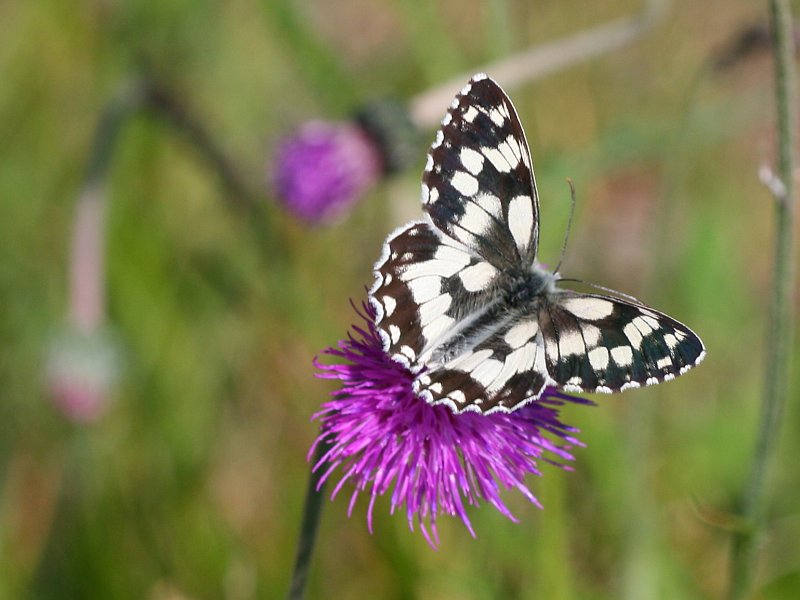
(Managers in northern England investigated the utility of assisted colonization for the marbled white, or Melanargia galathea. Individuals were relocated as far as 65 km beyond the margins of their native range to sites that were “predicted to be climatically suitable.”)


Overall, the authors hope that the assisted colonization debate can be “reframed” in the context of these three major issues. By focusing on these ideas and broadening the dialogue to include both non-scientists and scientists, it should be possible to shift from a “purely academic” debate to one that will yield concrete plans about how to proceed.

---
For supplemental images associated with this post, please visit the Anthrophysis pin board at Pinterest.

Lawler, J.J. and Olden, J.D. 2011. Reframing the debate over assisted colonization. Frontiers in Ecology and Environment 9(10):569-574.

Thanks to the following websites for providing the images used in this post:
http://www.thesanguineroot.com/?m=20110309
http://en.wikipedia.org/wiki/Iberian_Lynx
http://www.korseby.net/outer/fauna/lepidoptera/index.html

Thursday, 1 December 2011

Using evolutionary dynamics to inform education decisions

When animal behaviorists are asked to describe the "impact" or "application" of their work, they often mention how their results will contribute to conservation efforts or, occasionally, medicine. However, insights from behavioral studies can be relevant and useful to a number of fields, as recently demonstrated by a project in which researchers developed a highly successful education program based on behavioral observations and an understanding of how and why those behaviors evolved.


The project, the result of a collaboration of researchers from Binghamton University and the Binghamtom City School District in Binghamton, New York, culminated in the creation of the Regents Academy (RA), an education program for at-risk 9th and 10th graders. The design of the RA is based on the fundamental principle that schools are social groups whose  members must cooperate with each other to achieve goals. The ability to cooperate in social contexts is important not only for humans and other primates, but also for a variety of other animals ranging from bees to meerkats to sparrow-weavers. Even in animals that do not spend most of their lives in close-knit social groups, cooperation may be vital at particular times of the year or life cycle--such as during the breeding season, when male-female work to successfully rear their young together. Cooperation is also seen across species lines, as when many different types of animals work together to drive dangerous predators out of their territories.

 
(Binghamton, New York, USA)


In species that demonstrate cooperation, cooperative individuals tend to be, on average, more successful than those who prefer going rogue. As a result, the characteristics that make cooperation more likely--what the authors of the current study describe, in humans, as "a complex array of psychological mechanisms" that includes processes we are not even consciously aware of--have been passed on from generation to generation, thereby preserving these beneficial behaviors over time. Thus, we humans are hard-wired to cooperate with each other. The Regents Academy was built on the idea that those hard-wired tendencies can be used to promote and enhance cooperative behaviors in real-world situations.

The creators of the RA drew on three main fields of research when shaping the program. The first was economics, a field that has long been linked with cooperation research because of the give and take between individuals with different amounts of resources, and the need for everyone to succeed to some extent in order to prevent the market from going bust. Specifically, the authors focused on Nobel Prize-winning economics work that identified 8 characteristics that help groups achieve common goals: strong group identity, receiving benefits that are proportional to the costs of cooperating, making decisions by consensus, utilizing low-cost monitoring practices to ensure that nobody is "misbehaving," employing a graded system of punishments to correct misbehavior when it does occur, quick and reasonable conflict resolution, group autonomy, and similar relationships of individuals within the group as among different groups.

(Students at the Regents Academy in Binghamton, New York)


The second important source of information was research on development and psychological functioning in different settings. Over the course of human evolution, we have adapted to deal with difficult environments, including those where food, water, and shelter are scarce, and where predators, parasites, and disease are common. This has resulted in hard-wired responses to the type of early-life struggles that many at-risk students have experienced. Across the animal kingdom, researchers have long seen patterns indicating that individuals who experience early-life trauma invest  their resources into surviving and reproducing as soon as possible, thus ensuring the transfer of genes to the next generation. For these individuals, cooperation may not be beneficial because it requires too much time and effort, and may be associated with high costs that these individuals simply cannot bear. This suggests that cooperation can be fostered by creating an environment that is safe and enriched and does not lead to these built-in urges to avoid, or at the very least show disinterest in, cooperation.

Finally, the authors also drew inspiration from the learning literature. One important theme of this work is the necessity of short-term, as well as long-term, benefits. The evolutionary relevance of this characteristic is obvious--given environmental stochasticity, animals that cooperate only to achieve long-term goals would often have failed simply because something unexpected happened (a natural disaster, a change of weather, the sudden appearance of a predator, the outbreak of a bacterial infection, and so on). As a result, it pays (on an evolutionary scale) to work towards a long-term goal only when there are short-term incentives along the way to make continued cooperation worthwhile. Another major contribution of the learning literature was an emphasis on "alternative" ways of passing on information. After all, our modern linguistic skills and educational setting are only relatively recent developments; prior to the advent of written language, the human brain developed to learn and retain information even in the absence of formal instruction--as seen even today in many "traditional" societies around the world.

(Cooperative behavior is seen in a number of species, not just humans. Adult meerkats, for instance, help raise juveniles produced by other individuals, and all animals look out for predators in order to warn each other of potential danger.)


Cumulatively, these ideas provided an evolutionary framework around which the Regents Academy could be shaped. Recognizing that different goals could be achieved in many different ways, the collaborators attempted to select a group of practices and characteristics that would complement each other to promote the desired outcome--an improvement of grades among at-risk students. These included making the RA a self-contained, autonomous program with its own dedicated principal and staff; consulting students as much as possible when establishing rules and practices at the school; maintaining small class sizes to foster more personal relationships with instructors, and having a principal that knew and interacted with each student personally on a regular basis; providing short-term incentives for cooperation and learning (such as a half-day break from classes on Fridays); communal eating; and incorporating an emphasis on how lessons relate to real-world events.

In order to investigate the efficacy of the program, its creators performed a study in which they compared quarterly grades and performance on the state-mandated Regents exams between RA students and other at-risk students in the local high school (Binghamton High School, BHS), as well as "normal" BHS students. At the end of the RA's recently completed first year, dropout rates were significantly lower than among at-risk BHS students (2 vs. 10 individuals). Further, students at the RA had GPAs that were an average of 28 points higher than those of their BHS counterparts--a difference that emerged in the first quarter despite all students' having had similar grades during the previous year. RA students were also more likely to score a "pass" on the Regents exams than were at-risk BHS students; in fact, students at the Regents Academy were on par with "normal" students at the local high school. Interestingly, a within-school comparison of students involved in the RA "fun club"--in which they could spend half of every Friday engaged in a student-nominated selection of activities--indicated that those who participated had significantly better grades than those who used the time to catch up on work, go to the gym, or socialize. This indicates that short-term benefits of cooperation--in this case, the chance to relax and have fun--really can improve the likelihood of cooperative behavior and the achievement of group goals.

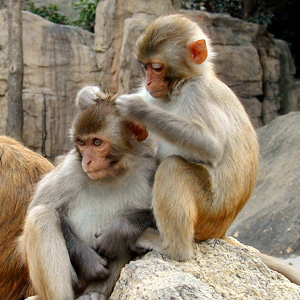
(There are many examples of cooperation in primates. One common example of a cooperative behavior is grooming. Although this behavior likely began as a way to remove parasites, it is seen even in groups where parasites are not a major problem--suggesting that this practice has become an ingrained part of primate societies because it plays a vital role in facilitating bonding and cooperation.)


The creators of the program acknowledge that many educators may feel the urge to regard at-risk students as a lost cause--particularly given how many specially-designed programs for these individuals have met with failure. However, the researchers feel that their results indicate that it is possible to help these students achieve; further, they also believe that the successes reported here stemmed from the use of an evolutionary framework to inform the design of the Regents Academy. The authors also point out that their school has characteristics that are similar to those of other successful programs for at-risk students--an example of "convergent evolution" of education systems. Given that these commonly-used techniques clearly seem to work well--and, further, do not cost much more, and in fact may produce better outcomes than, more standard practices--they wonder why more institutions don't employ these methods.This is especially perplexing since each of the design features of the RA are intuitively reasonable; even among educators who do not believe in the need for an evolutionary framework for learning, surely the logic behind, and success of, each of these methods is enough to recommend them.

However, the authors also caution that "a cooperating group is like an organism": There are many parts that make up the whole, and removal of one can cause the entire organism to die. This may explain why schools that incorporate some but not all of these characteristics have previously met with failure. The researchers also point out that the framework they have developed may be useful in a variety of contexts in which cooperation and learning are the ultimate goals; however, some of the concepts they propose may need real-world testing in order to determine their utility in different settings.


---
Wilson, D.S., Kauffman Jr., R.A., Purdy, M.S. 2011. A program for at-risk high school students informed by evolutionary science. PLoS ONE 6(11):e27826.

Thanks to the following websites for providing the images used in this post:
http://binghamton-endicott-endwell-vestal-homes-rentals-forsale-mls.com/local/New%20York/Binghamton
http://centralny.ynn.com/content/all_news/514787/district-creates-regents-academy-for-at-risk-students/
http://science.howstuffworks.com/environmental/life/zoology/mammals/meerkats.htm
http://academic.reed.edu/biology/professors/srenn/pages/teaching/web_2008/dklj_site_final/home.html

Tuesday, 29 November 2011

The different personalities of urban and rural song sparrows

Just as humans have particular traits that may indicate whether they hail from the city or the country, so, too, do some wildlife species. Compared to their rural counterparts, for instance, urban birds may be slightly larger, have lower levels of stress hormones, sing more during the middle of the night (because of artificial lighting), and sing higher-pitched songs (to avoid being "masked" by human noises). A recent study on song sparrows (Melospiza melodia) suggests that city birds may also have different personalities than their country cousins.

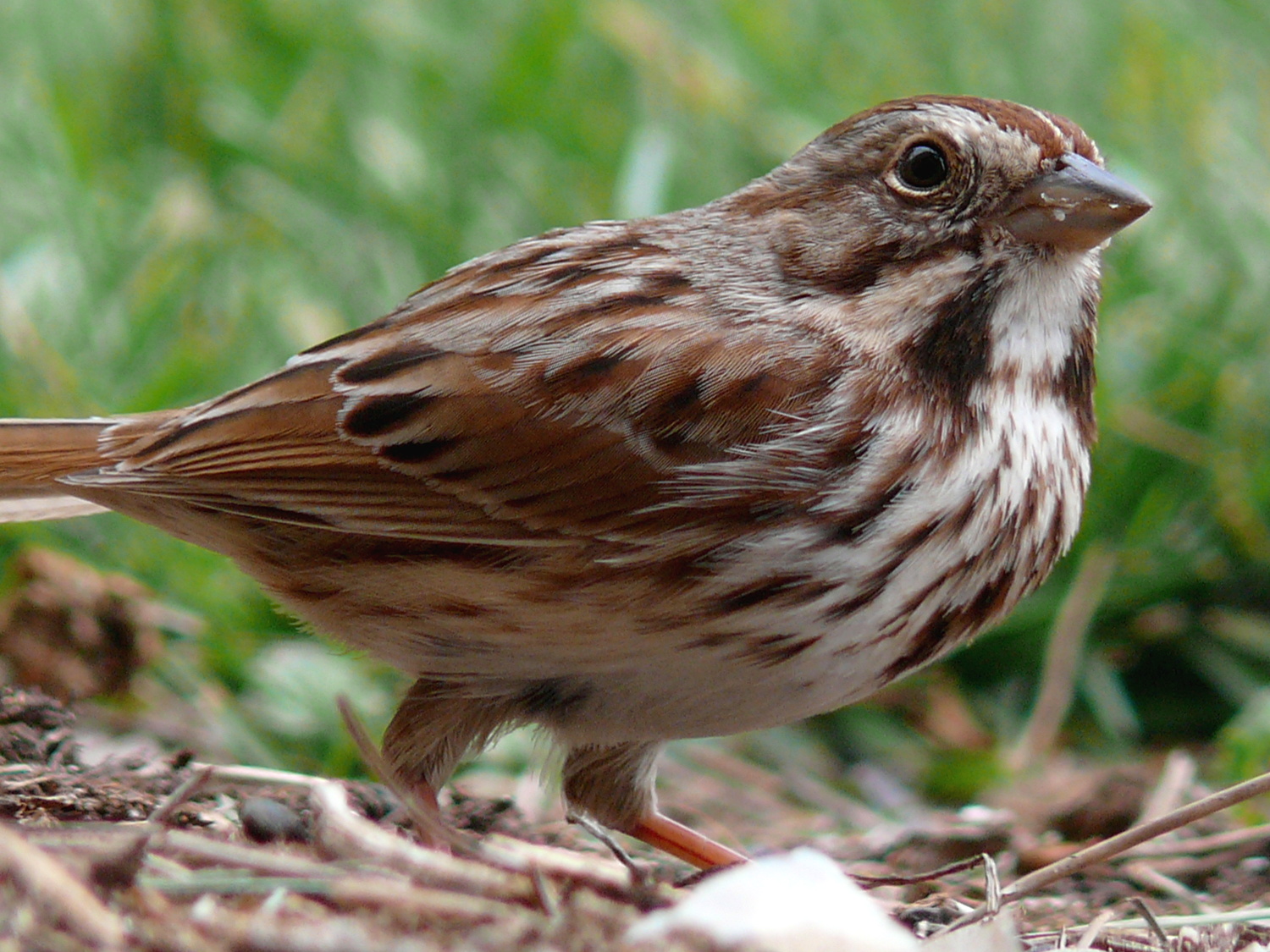
(Song sparrow, Melospiza melodia)

The research was conducted by collaborators from the College of Charleston and Western Carolina University. Their work followed up on a previous report that rural birds in Pennsylvania displayed different "behavioral syndromes" (or suites of related behaviors--what we might colloquially refer to as "personalities") than urban birds in North Carolina. The researchers wished to know whether this might represent widespread differences between city and country birds, or whether the result was merely driven by geographical differences between Pennsylvania and North Carolina animals. They hoped that the answer to this question might be useful in explaining why some species do so well in urban areas while others fail, and in predicting which animals might adjust to future introductions of human disturbance.

Rather than measuring all behaviors of the focal birds, the researchers examined just two: boldness and aggressiveness. The first is an indication of an animal's willingness to engage in risky behaviors such as exploration and approaching a foreign object--two activities that have obvious consequences in human environments that offer new and different stimuli relative to birds' natural habitats. The second characteristic is aggressiveness, which, in many animals, is correlated with boldness. Specifically, animals that are bolder often get themselves into sticky situations where it pays to also be more aggressive, else suffer the consequences of attacks by rivals or predators. Where species are expanding their ranges, it is common to see more aggressive individuals, indicating that this trait is advantageous in gaining a foothold in novel habitats--such as anthropogenic environments.

 
(Typical habitat in Crawford County, PA)


For the current study, the researchers measured both the boldness and aggressiveness of male song sparrows in Crawford County, Pennsylvania. "Rural" birds were those living on State Games Land, while "disturbed" birds were those living in two nearby towns (Linesville and Conneaut Lake). In order to quantify the birds' boldness, the researchers performed a "flight initiation distance" experiment. This consisted of having a pedestrian approach each male at a standard rate, then measuring how close the person got to the bird before it took flight; shorter distances indicate bolder males. In order to quantify aggressiveness, the researchers played each male a recording of another male's song, simulating a territorial intrusion. An observer then measured how close each male approached the speaker; more aggressive males were those who went nearer to the "intruder."

Urban males were both bolder and more aggressive than their country counterparts; further, males from Linesville and Conneaut Lake showed very similar responses, indicating that, to birds at least, there may not be significant differences between specific urban locations (even when, as here, the population size differs noticeably). Across all song sparrows in general--regardless of where they lived--aggression and boldness were positively correlated. However, when city and country birds were analyzed separately, this correlation only held true for the latter: In the country, males are generally as aggressive as they are bold; in the city, though, it is not uncommon to find males that are bold and passive or shy and aggressive. 

 (Song sparrow showing an aggressive response towards a speaker broadcasting another male's song)

Importantly, these patterns were not caused by reduced variation in one type of habitat; in both settings, the ranges of values observed for each trait were similar--the major difference was how those traits co-occurred, or formed personalities. So what is driving this "breakdown" in song sparrow behavioral syndromes in urban areas? One important factor may be predation--which may occur at different levels, or involve different types of predator, in urban and rural areas. One of the biggest costs of being too bold is accidentally exposing yourself as a potential snack, so variations in predator-related factors could determine whether it is helpful or harmful to be inquisitive and exploratory. Other major differences between urban and rural areas have to do with the habitat--in terms of how much there is, how it is structured, how many other individuals are packed into the same unit of distance, and whether there is supplemental food being provided by humans. These variations may favor different levels of aggressiveness, since birds that can utilize these different resources side by side with their neighbors, without getting into any arguments over what belongs to who, may be more successful.

Additional studies will be needed to determine the exact mechanisms of the patterns seen in this study. Long-term research will be useful in uncovering whether these different personalities indicate human-driven evolution (since these behavioral characteristics are genetic traits that can be passed from one generation to the next), or whether they are yet another example of the amazing behavioral flexibility of some species of wildlife. One of the most surprising outcomes of the study is that these strong inter-population differences were observed even when the "urban" birds lived in quite small towns (with populations of ~700 and ~1100). Thus, it is clear that even relatively minor levels of human influence can have a noticeable impact on animal behavior.

---
For supplementary images associated with this post, visit the Anthrophysis pin board at Pinterest.

Scales, J., Hyman, J., and Hughes, M. 2011. Behavioral syndromes break down in urban song sparrow populations. Ethology (117):887-895.

Thanks to the following websites for providing the images used in this post:
http://en.wikipedia.org/wiki/File:Song_Sparrow-27527-2.jpg
http://www.sbms.mvm.ed.ac.uk/research/postdoc/postdoc%20members/Wacker/Index.html
http://www.panoramio.com/photo/42351792

Monday, 28 November 2011

Anthropogenic noise prompts both short- and long-term changes in birdsong


As increasingly more bird species are found to alter their vocalizations in the presence of anthropogenic noise, researchers are developing more detailed questions about the process by which this behavioral modification occurs. One of these questions focuses on the time scale over which these noise adjustments happen: Do birds in noisy areas only vary their vocalizations during specific noisy events, or do noise-disturbed birds always sing different songs than their undisturbed counterparts? Results of a recent study by collaborators from the University of Ottawa and the University of Windsor suggest that, in one species at least, the answer is “both.”

That species is the red-winged blackbird, Agelaius phoeniceus, which is often found living in marshes alongside noisy roads. Singing male blackbirds produce songs across a 1-5 kHz frequency range, the lower end of which overlaps with the frequencies dominated by anthropogenic noise. Songs comprise a few introductory syllables and a broadband trill; the latter song element appears to be the most important part of the song, as it facilitates species recognition. In the current study, the researchers investigated whether, and how, anthropogenic noise influences the structure of these trills.

(A male red-winged blackbird, Agelaius phoeniceus)


The study involved two separate experiments. In the first, the researchers located males in marshes that are not exposed to human noises. After placing a set of speakers near each territorial male, the scientists then recorded songs produced against a background of no noise (a silent control treatment) and 89-dB, low-frequency white noise (approximating traffic). This allowed them to investigate whether individual birds were capable of “real-time” shifts in response to increasing levels of background noise. In the second experiment, the researchers compared songs produced by males in undisturbed, quiet marshes with those performed by roadside males singing in temporarily quiet periods. This part of the study was aimed at determining whether all blackbirds sing similar songs during quiet conditions, or whether long-term exposure to generally louder ambient noise environments leads disturbed birds to make permanent shifts in their vocalizations.

Previous studies have shown that birds may alter a variety of song parameters in response to noise. Thus, the authors of the current study measured several different variables associated with each recorded trill: duration, minimum frequency, maximum frequency, and energy distribution of the spectrum (in other words, which frequency the birds produce at the highest amplitude). They also performed two types of validation in order to make sure that their study techniques were sound. The first was a basic comparison of average environmental noise levels at roadside versus “undisturbed” marshes; the former were verified as louder than the latter (~65.8 dB compared to ~51.7 dB). The second validation investigated whether the experimental playback condition may have artificially influenced results because of the difficulty of accurately measuring birdsong against a background of white noise; the experimental setup again passed the test, as the results indicated that the patterns measured here were not merely an artifact of study design.

(Roadside marshes provide habitat for red-winged blackbirds--and may also provide considerable levels of background noise)

For the first experiment, the researchers analyzed 140 songs from 20 male blackbirds. Of all the song characteristics measured, only one was influenced by the introduction of experimental noise: entropy, which decreased in response to noise. This variable is a measure of song “randomness;” purer tones have a value close to 0, while white noise has a value closer to 1. This entropic shift resulted from the birds’ concentrating their spectral energy at lower frequencies. The second experiment, which analyzed 344 songs from 63 males, found very similar patterns as those observed in the first half of the study. The only variable associated with habitat type was trill entropy, as trills at roadside marshes were more tonal than trills at undisturbed sites, and, again, this was caused by a concentration of spectral energy at lower frequencies.

Taken together, the results of these two experiments indicate that red-winged blackbirds exposed to anthropogenic noise are capable of both short-term behavioral plasticity and maintenance of long-term behavioral differences, the latter of which may even be a sign of adaptation. Although this is the first report that tonality is influenced by human noise pollution, previous studies have shown that natural noise has similar effects (for instance, in large-billed leaf warblers, Phylloscopus magnirostris and several species of frog, all living near loud running water in the Himalayas).

(Large-billed leaf warbler, Phylloscopus magnirostris--another species that adjusts the tonality of its vocalizations in response to ambient noise)


Given all of the ways in which the blackbirds could have altered their songs, it is interesting to ponder why they focused only on entropy. Some possibilities are associated with the detectability of the signal: Higher frequencies attenuate more rapidly when transmitting through the environment, so the redistribution of spectral energy to the lower frequencies may enhance signal transmission. Additionally, narrow-band signals (such as pure tones) are easier to discriminate from background noise, making more tonal songs more receiver-friendly. Other possibilities are associated with the potential costs and constraints associated with non-entropy-related alternatives: Perhaps the birds’ morphologies prevent them from achieving some song qualities, or maybe it requires too much energy to produce certain types of songs. Of course, it is also possible that the manipulations measured here were merely a side effect of some other, unmeasured, variable.

Other important costs may be those associated with signal transmission and receiver discrimination. Even for the birds that manipulated their songs in the presence of noise, it is possible that these vocal acrobatics were not enough to prevent their songs from being masked by anthropogenic noise. If so, we might expect to see that males in noisier locations have more difficulty wooing females and/or producing successful broods. Depending on how the birds choose mates and habitats, it is feasible that noise could eventually drive the formation of different subspecies of blackbirds. All of these possibilities have serious conservation and management implications, causing the authors of the current research to recommend follow-up studies in the future.

---
Hanna, D., Blouin-Demers, G., Wilson, D.R., Mennill, D.J. 2011. Anthropogenic noise affects song structure in red-winged blackbirds (Agelaius phoeniceus). The Journal of Experimental Biology 214:3549-3556.

Thanks to the following websites for providing the images used in this post:
http://sdakotabirds.com/species/red_winged_blackbird_info.htm
http://www.flickr.com/photos/michiganherper/page98/
http://www.indianwildlifeblog.com/2008_12_01_archive.html

Sunday, 27 November 2011

Human-associated species dominate restroom bacterial communities

The results of a recent study characterizing microbial communities in public restrooms may be enough to change the ways of those who don't already wash their hands after using the toilet. The study found that restrooms are dominated by human-associated bacteria--particularly those from the skin, gut, and urinary tract. Although this is not particularly surprising, the "biogeography" of these species--or which surfaces they were most commonly found inhabiting--was a bit unexpected. While there were three distinct clusters of species (bacteria on or near toilets, those on the floor, and those on surfaces mostly touched by hands), there were also several groups of bacteria that were present on all surfaces. This includes gut and urine bacteria, which were found not only on the seats and handles of toilets, but also on sink faucet handles, soap dispensers, and even on the handles of doors leading out of the restroom--in other words, the areas touched after hand-washing has already been completed.

(Corynebacterium diphtheriae, an Actinobacteria)


The study, conducted by researchers from a variety of departments at the University of Colorado--Boulder, was not designed to produce results to frighten the squeamish, but to better understand the bacterial communities living inside human establishments. This has also been the goal of previous investigations, but those studies have generally relied on cultivation-based techniques that may fail to document the many bacterial species that cannot be grown in the lab. The current effort used a cultivation-independent technique known as barcoded pyrosequencing. This method was focused on 16 S rRNA, a highly conserved bacterial gene. Similar gene sequences from across the sampled communities can be clustered into "operational taxonomic units" (or OTUs, a bacterial equivalent of "species" that takes into account the unique way in which bacteria can share genes with each other) that can then be used to assign taxonomy and generate a phylogenetic tree.

In this case, the bacteria in question were sampled from 10 surfaces in each of 12 public restrooms (6 male and 6 female): door handles into and out of the restroom and restroom stall, faucet handles, soap dispensers, toilet seats, toilet flush handles, the floor around the toilet, and the floor around the sink. Bacteria in restroom communities were compared to those found in potential source locations, including the tap water flowing into the restrooms' sinks, soil that could be tracked in on shoes, and humans (from their skin, mouth, gut, and urine). The study also explored the similarity of bacterial communities on different surfaces within bathrooms in order to see whether certain types of bacteria typically cluster in particular areas.

(Streptococcus pneumoniae, a member of the phylum Firmicutes)


Although a total of 19 phyla were observed across all restroom surfaces, most samples were representatives from one of four phyla: Actinobacteria, Bacterioidetes, Firmicutes, and Proteobacteria. Interestingly, these were the same phyla identified by previous studies utilizing less powerful censusing techniques. Certain taxa were found on all surfaces. The most common of these were associated with human skin (Propionibacteriaceae, Corynebacteriaceae, Staphylococcaceae, and Streptococcaceae), which is not surprising given that they are known to be fairly hearty species that can survive for extended periods away from their preferred environment. More disturbing was the finding that some gut, mouth, and urine bacteria were also found on all surfaces--even on door handles leading out of the room.

The community-level analysis revealed that bacteria could be separated into three broad groups: those on the floor, those on toilet surfaces, and those on surfaces touched by hands. Floor surfaces had many low-abundance taxa and were the most diverse; these environments harbored an average of 229 OTUs, in comparison with 150 found in other areas. Occasionally, "floor species"--such as those typically found in soil--were also observed on toilet handles, indicating that some people were probably flushing with their feet in order to avoid touching germy surfaces. The most troubling observation was the "enrichment" of toilet seats with bacteria associated with the human gut; a high prevalence of these species could encourage outbreaks of intestinal illnesses.


Mouths (thankfully) were not major contributors to restroom bacteria. Neither was tap water running from the faucet. Ventilation systems and cleaning equipment were not sampled in the current study, and the authors admit that these could be important contributors to investigate in the future. Overwhelmingly, though, these results support previous findings that humans (in particular, our skin, gut, and urine) are the main source of bacteria in our environments. The patterns reported here also emphasize the importance of good hygiene in minimizing transmission of human pathogens: Even the cleanest person can pick up unfriendly bacteria by merely touching surfaces exposed to other individuals. Any readers feeling a bit disgusted about our species' cleanliness should take heart. While some of the bacteria may have been transferred directly to bathroom surfaces via contact with our skin, water splashing and aerosolization of particles during flushes are also likely culprits.

---
Flores, G.E., Bates, S.T., Knights, D., Lauber, C.L., Stombaugh, J., Knight, R., and Fierer, N. 2011. Microbial biogeography of public restroom surfaces. PLoS ONE: 6(11):e28132.

Thanks to the following websites for providing the images used in this post:
http://wishart.biology.ualberta.ca/BacMap/cgi/getSpeciesCard.cgi?accession=NC_002935
http://wishart.biology.ualberta.ca/BacMap/cgi/getSpeciesCard.cgi?accession=NC_003028
http://www.burtontrainingsolutions.com/page12.htm

Saturday, 26 November 2011

Traditional farmland provides overwintering habitat for Spanish great bustards

We humans may be tempted to think that one farm is like any other, but at least one species of bird--the great bustard, Otis tarda--shows clear preferences for some agricultural areas over others. Specifically, overwintering female bustards seem to prefer traditional farmland habitat characterized by a mosaic of vineyards and olive groves, low human population densities, and minimal anthropogenic infrastructure. This preference differs from that shown during the breeding season, indicating that conservation plans drafted to protect this species--which is classified as "vulnerable" at national, European, and global levels--need to be more comprehensive than previously realized.


(A great bustard, Otis tarda)

These results were the product of a study performed by four collaborators from the Museo Nacional de Ciencias Naturales and the Universidad Complutense (both in Madrid). Spain, with more great bustards than any other country, contains approximately 60% of the global population of these birds. However, anthropogenic intensification in the Iberian Peninsula is a potential threat to this vulnerable species. Major worries include the construction of additional infrastructure, creation of agricultural monocultures, and replacement of traditional vineyards. Bustards are generally quite happy to live near humans during the breeding season, but, prior to the current study, little was known about their habitat preferences during the winter. Seasonal variation in habitat use might mean that current conservation plans do not adequately protect the species.

In order to evaluate great bustard habitat use, the researchers placed radio-transmitter backpacks on 68 females and tracked them for at least two years apiece. Females were sighted multiple times per season and GPS coordinates were collected for all locations where the females were present. These were used to determine each bird's breeding and wintering areas. Habitat surveys were then performed in order to characterize each area's topography (altitude, slope, surface undulation), climate (temperature, rainfall, amount of sunshine), land-use type (type and amount of farmland, pastureland, and/or vegetation), and human influence (distance to nearest road and urban area, road length, area of urban cover, human population density).


(A mosaic of Spanish vineyards and woodland)

Most females (77%) showed high fidelity to their wintering sites from one year to the next. Among those who migrated from a breeding site in one area to a wintering site somewhere else, 80% wound up in the same location: Mesa de Ocaña in North Toledo. Overwhelmingly, the birds chose wintering sites that were flatter, at higher altitudes, warmer, and less anthropogenically disturbed than their breeding sites. This final characteristic resulted from the sites' being farther from urban areas, containing lower human population densities and less human infrastructure, and possessing more mosaic (e.g., traditional) farmland.

The researchers also performed a wintering-ground-only analysis in which they compared habitat characteristics of settled areas to those of nearby unused areas. Although there were 9 traits that were significantly different between these two types of site, the most important predictors of bustard habitat choice were amount of vineyard and level of substrate diversity. Specifically, the birds preferred areas with more vineyard habitat and more uniform substrate--the latter of which was generally caused by a lack of trees.

(Great bustard displaying during the breeding season)

One of the most exciting results of the study was the identification of the North Toledo wintering site; this is not only the most important great bustard wintering site in Spain, but, with flock sizes exceeding 200 birds and with densities of 6.3 birds per square kilometer, the most important overwintering site for this species in the world. However, the birds' clear preference for a less disturbed wintering area is a bit worrying given the generally high rates of anthropogenic habitat alteration in the region. 

Female bustards appeared particularly enamored of traditional vineyard areas, where vines are shorter and more dispersed, and where there are fewer humans nearby. This type of agricultural area is increasingly being replaced with modern vineyards characterized by wire-supported vines where the plants are higher and more human workers are required to regulate irrigation equipment. The researchers report that nearly 44,000 hectares of traditional vineyards in the region have already been converted, with plans to convert another 100,000 hectares in the near future. This could reduce habitat not only for great bustards, but also for other endangered species such as the little bustard (Tetrax tetrax), black-bellied sandgrouse (Pterocles orientalis), and pin-tailed sandgrouse (Pterocles alchata).

(Little bustard, Tetrax tetrax)

Although it is heartening to see wildlife happily utilizing certain human-altered habitats, the authors of the study are worried about the efficacy of the Special Protection Areas (SPAs) created to provide protected habitat for endangered species like the great bustard. Specifically, the researchers state that regional authorities associated with the SPAs have actively supported agricultural transformation and infrastructure construction--two habitat modifications that are particularly likely to make sites less bustard-friendly. Thus, they hope that their new data on the birds' winter habitat preferences can be used to design more appropriate conservation and management plans that protect the birds and their homes year-round.

---
For supplementary images associated with this post, please visit the Anthrophysis pin board on Pinterest.

Palacín, C., Alonso, J.C., Martín, C.A., and Alonso, J.A. 2011. The importance of traditional farmland areas for steppe birds: a case study of migrant female great bustards Otis tarda in Spain. Ibis, online advance publication.
 
Thanks to the following websites for providing the images used in this post:
http://suziesden.com/?tag=guardian&paged=2
http://www.bibendum-times.co.uk/tags/spain/
http://www.willridgeimages.co.uk/Latest%20Images/Latest%20Images%2003/Spain.htm