WHERE HUMANS AND NATURE COLLIDE

Sunday, 22 September 2013

Virtual gardens illuminate real-world attitudes about nature

Researchers have long struggled to design surveys that collect detailed and informative data without introducing bias through the use of loaded, confusing, or restrictive wording. A team of French researchers has come up with a novel solution to this problem: Toss out the surveys altogether, and replace them with a virtual computer program that allows respondents to express their thoughts and preferences in actions rather than in words.

This is the idea behind Virtual Garden, a program that allows users to select from 95 different features in order to create their ideal garden. The features fall within seven different categories: animals, flowers, lawn and cover, sport and playing, trees and bushes, water, and other. The program keeps track of each item that is added and adjusted, and calculates biodiversity as biotic features are introduced into the virtual habitat. Users are able to view the garden from multiple angles and even take a virtual stroll through the area in order to evaluate their progress and determine whether further manipulations need to be made to the environment.


Far from being merely a nerdy new version of The Sims, the program was designed to assess which features people most want to experience when they visit public gardens. Further, an analysis of the virtual habitats could help clarify the role that biodiversity has in driving humans' overwhelmingly positive responses to green spaces--particularly those located in otherwise urban areas. Finally, by collecting basic social, economic, and demographic information about each program user, the program's developers can also assess whether habitat preferences are influenced by age, education, income, and general interest in the natural environment.

The research team responsible for Virtual Garden trialled the program among 732 Parisian hospital patients. Each individual was given a 30-minute time limit for designing the garden, though the average length of time required was only 19.2 minutes. Gardens typically contained approximately 24 different features--9 "objects" (such as ponds), 5 animals, 8 flowers, and 5 woody species (trees or bushes). Overall, users included fewer biotic features than were expected by chance. Animals were particularly underrepresented, with nearly a third of gardens containing no animals at all, and almost another third containing fewer than 5 animal species. Larger animals--especially mammals and herptiles--were not very popular; the least preferred species overall were foxes and chimpanzees. Ladybugs, peacocks, and great tits, on the other hand, were the most preferred. The most popular species were generally those that are common in Parisian gardens, suggesting that patients tended to populate their virtual gardens with species that are most familiar to them.


Several demographic and socioeconomic factors influenced garden design. For example, men included fewer animals and flowers than women; younger patients included more non-native species; and people who showed a greater interest in conservation and nature activities tended to create gardens with higher biodiveristy. Interestingly, plant richness was higher in gardens created by people who grew up in more rural areas, again suggesting that familiarity with species is an important driver of habitat preferences.

The Virtual Garden trial produced two main results. First, it suggests that computer programs may be a useful way to collect data from people without accidentally introducing bias into a study. Such programs are likely to be particularly useful in situations where researchers need to address or describe situations that are highly visual in nature--such as habitat structure, the aesthetics of which can greatly influence respondents' attitudes and opinions. Second, the patterns reported here get us one step closer to understanding city-dwellers' complex and often contradictory responses to green spaces. There is particularly strong evidence of an "extinction-of-experience" process, whereby people judge biodiversity and aesthetics according to what they have previously experienced, rather than what may be natural, healthy, and/or desirable in a given environment.


The creators of the Virtual Garden hope that conservationists and managers can use their program to collect and compare data from across a wide geographic range, and, therefore, to improve our "understanding of the role culture and living context...play in people's relations with biodiversity." This could not only help save threatened species, but also improve the well-being of people by increasing and improving human-nature interactions even in the most urban of environments.

---
Shwartz, A., Cheval, H., Simon, L., and Julliard, R. 2013. Virtual Garden computer program for use in exploring the elements of biodiversity people want in cities. Conservation Biology 27(4):876-886.


Saturday, 21 September 2013

The Szechuan pepper: It's electric!

Szechuan peppers, which are responsible for spicing up a variety of Asian dishes, are considered unique among peppers for their "lemony overtones" and the tingling, almost electric, sensation that they cause in the mouths of consumers. The latter has been attributed to a compound known as hydroxyl alpha sanshool (also known simply as sanshool), but the neurological mechanism responsible for the effects of sanshool has not previously been understood. This inspired a research team from the University College London to perform a suite of experiments characterizing how eaters perceive Szechuan peppers, and exploring the sensory processes influencing these experiences. Their results suggest that the ubiquitously identified tingling sensation is produced by the activity of "rapidly adapting" (RA) sensory nerves that are more generally associated with mechanical, rather than chemical, stimuli.

(Szechuan pepper, also known as Sichuan or Szechwan pepper. There are at least two species responsible for this spice. Although the husk is generally considered the most important part of the plant for culinary purposes, some cooks may also work with leaves. The peppers may also be used in medicine. Image courtesy of Wikimedia.)


In the first portion of their study, the researchers applied a pepper solution to the lower lips of 12 volunteers; additional volunteers were also treated with ethanol and water control solutions. Each volunteer was asked to indicate whether his/her treatment produced a tingling, burning, cooling, warming, and/or numbing sensation. All individuals treated with the pepper solution agreed that it felt tingly. Although some people also described the ethanol treatment in this way, they indicated that the pepper solution resulted in a unique sensation that was both more intense and associated with a regular pulse.

The nature of this temporal effect was explored in more detail in the second part of the study. Volunteers were again treated with a swab of pepper solution applied to their lower lips. Once the tingling sensation began, the researchers applied a mechanical vibration to each volunteer's index finger, then asked the volunteers to indicate whether this vibration was of a higher or lower frequency than the feeling in their lips. Participant responses were used to adjust the frequency after each trial, thus allowing the researchers to gradually narrow in on the exact frequency of the pepper stimulus. Volunteers converged on a mechanical vibration frequency of 50.0 Hz, which happens to be near the midpoint of the range of frequencies (10-80 Hz) to which RA1 afferent fibers are most sensitive.

(Afferent nerves such as the RA1 are responsible for relaying information from sense organs, including skin, back to the brain. Image courtesy of Wikipedia.)


To double-check the legitimacy of comparing vibrations between lips and fingers, the researchers performed a third experiment in which eight volunteers were asked to compare the vibration frequencies of stimuli applied to first their lips and then their fingers, with a 1.5-s delay in between. Volunteers were most sensitive to convergence at a slightly lower frequency than that identified in the second experiment (46.4 Hz vs. 50.0 Hz). However, these two values are quite close, and the results clearly show that people are capable of relating sensations between fingers and mouths--suggesting that the researchers had come up with a suitable method for estimating pepper vibration frequencies.

In the final portion of the study, volunteers were exposed to both the mechanical and pepper stimuli sequentially. Because nerves need to "reset" between stimulus events, the second stimulus should have a lesser effect than the first--but only if both stimuli are activating the same set of nerves. After being exposed to an initial "adaptation stimulus" to their lips, volunteers were treated again with either a mechanical vibration or a pepper swab. A mechanical vibration was then applied to their fingers, and volunteers were asked to report on whether the frequency of this stimulus was higher or lower than that on their lips. As expected, volunteers had difficulty pinpointing the frequency of the second treatment, indicating that their nerves were still recovering from the adaptation stimulus. This was true regardless of whether the second treatment was a mechanical vibration or a pepper swab. In other words, both types of stimuli probably activate the same nerves.

(Hydroxy alpha sanshool, the compound responsible for the tingling sensation caused by Szechuan pepper. Gourmands might consider adding this chemical to their dishes in order to change the perception of other flavors, or to help diners experience food both chemically and mechanically. Image courtesy of Wikimedia.)


Taken together, results from the four experiments strongly suggest that the "light-touch" RA1 nerves are responsible for creating the tingling sensation that results from eating Szechuan pepper. Although sanshool is known to activate at least four other types of nerve fibers, a variety of factors--including the locations of those fibers and the types of sensation that sanshool produces when interacting with them--suggest that RA1 nerves are the most important player in producing a response to pepper-laden foods.

The authors suggest that these results may help us better understand the "pins and needles" sensations that are associated with some injuries and neural abnormalities. On a more fun note, however, they also point out that their findings may be of interest to gastronomists interested in enhancing their eating experiences. Szechuan pepper may not be the only food that influences taste by mimicking touch; we should be on the lookout for others that might similarly spice up our meals, both literally and figuratively. Further, because of the simultaneous chemical and mechanical effects of Szechuan peppers, chefs may be able to alter other flavors--or diners' perceptions of them--by adding sanshool to their culinary creations.

---
Hagura, N., Barber, H., and Haggard, P. 2013. Food vibrations: Asian spice sets lips trembling. Proceedings of the Royal Society B 280(1770): online advance publication.

Friday, 30 August 2013

Shortwave light pollution may contribute to moth declines

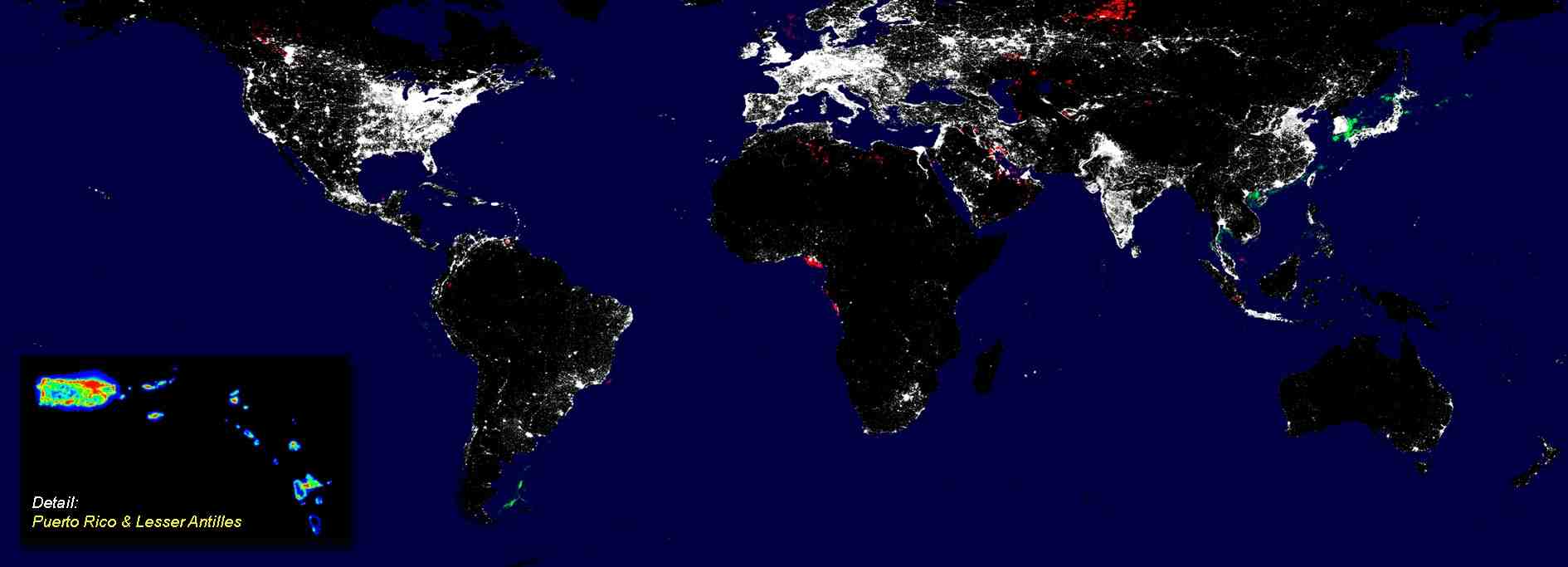
Research on the effects of nighttime pollution is still in its infancy. Scientists know that anthropogenic illumination has been steadily increasing over time--at a rate of ~6% per year--but have a limited understanding of which species it affects, and how. Nocturnal organisms seem particularly likely to suffer in the presence of light pollution, but a recent study indicates that responses to artificial illumination can vary even between close relatives--and that these variations can stem from differences in lighting regimes.

Artificial nighttime lighting. Image courtesy of EarthZine, which also features an interesting article about the impacts of nocturnal light pollution.

The study, conducted in a historical garden at the University of Exeter's Penryn Campus, found that shorter wavelength (whitish) lights attracted more moths than longer wavelength (yellowish) lights--especially when both types of light were broadcast simultaneously and moths had a choice between the two. This pattern was particularly strong for owlet moths (Noctuidae); geometer moths (Geometridae), on the other hand, were equally attracted to both short- and long-wave light. Both moth groups fall into the larger category of "macromoth," a set of species that have declined markedly in recent years.

Intriguingly, population decreases have been observed in nearly twice as many species of Noctuidae as Geometridae, suggesting that short-wave light pollution may have played an important part in the decline of these animals. For that to be confirmed, however, researchers will need to overlay maps of light pollution and moth decline and see whether the Noctuid decreases have been particularly noticeable in areas with shorter wavelength lighting.

A lesser broad-bordered yellow underwing, a.k.a. Noctua janthe. This is one of several noctuid species captured during the study. Image courtesy of Chris Harlow, via UK Moths.

The relatively simple methods used in the current study suggest that this follow-up work will not be too difficult to accomplish. During the summer (June-October) of 2012, the researchers broadcasted light from lamp-post structures fitted with either longer wavelength or shorter wavelength bulbs; lights were turned on both independently (e.g., short wavelength or long wavelength only) and together (e.g., both wavelength types broadcast simultaneously). Each light was fitted with safari traps designed to capture moths attracted to the glow. In the morning, researchers examined their captives and identified each to the species level. In addition to performing analyses on overall moth abundance and diversity, the scientists also investigated data concentrating only on the two most abundant families (Noctuidae and Geometridae) and species (Ochropleura plecta, a geometrid, and Noctua janthe, a noctuid).

While it may be easy to construct artificial light treatments, it may not be so simple to determine the mechanisms driving insect responses to the illumination. Both physiology and morphology (among other things) are likely to play important roles in light attraction: Moths are probably most attracted to the wavelengths to which their eyes are most sensitive, while their locomotion skills may help determine whether the animals are able to successfully wing their way towards the bulbs.

Flam shoulder, a.k.a. Ochropleura plecta, the geometrid most commonly caught during the current study. Image courtesy of Ian Kimber, via UK Moths.

Thus, researchers will probably need to take moths into the laboratory in order to collect data on these and other species-specific characteristics. It's unlikely that they will be able to study these traits in all 61 British macromoths that have recently experienced declines. However, careful selection of a few representative species may yield important findings that can illuminate a path towards improved management practices beneficial to these declining insects.

---
Somers-Yeates, R., Hodgson, D., McGregor, P.K., Spalding, A., and ffrench-Constant, R. 2013. Shedding light on moths: shorter wavelengths attract noctuids more than geometrids. Biology Letters 9(4): online advance publication.

Friday, 16 August 2013

Effects of Deepwater Horizon oil spill likely to last for decades

The catastrophic explosion on the Deepwater Horizon drilling platform allowed five million barrels of oil to gush into the Gulf of Mexico between April and July 2010. Since then, remediation and restoration efforts have helped to remove obvious signs of the disaster and return affected coastal communities to their pre-spill condition. But according to a recent study published in the academic journal PLoS ONE, the benthic, or sea-floor, environment around the disaster area still may require years to make a full recovery.

These conclusions were based on analyses of deep-sea sediment samples collected at 68 sites throughout the Gulf. The sampling locations, which were visited in autumn 2010, were selected because they radiate outward along a contamination gradient stretching away from the wellhead from which the crude oil flowed. The nearest sampling points were less than 1km from the wellhead, while the farthest were 125km away.

Emergency crews respond to the Deepwater Horizon explosion and spill. Image courtesy of the U.S. Coast Guard.

At each site, researchers characterised the physical properties of the benthic sediment and tested for signs of oil and other contaminants. They also quantified the abundance and diversity of benthic organisms commonly used as bioindicators: larger bottom-dwelling creatures known as macrofauna, and smaller species called meiofauna. A statistical technique called a principal component analysis (PCA) was then employed to look for relationships between these ecological variables.

The analysis revealed a clear link between contaminants associated with drilling (especially barium, polycyclic aromatic hydrocarbons, and total petroleum hydrocarbons) and the diversity of benthic creatures. Specifically, areas with more contaminants had very high abundances of nematodes relative to copepods, but low overall diversities of both nematodes and copepods. The driver of these results is unclear, but the researchers hypothesise that the influx of organic material from the oil spill might have led to a bacterial bloom. This would have been advantageous to bacteria-eating nematodes, but could have been harmful to copepods and nematodes with other diets.

To get a clearer picture of how these patterns were affected by each sampling site’s proximity to the wellhead, the researchers used a colour-coding scheme to label each site. Areas that had high contamination and low biodiversity (eg, those where the spill’s footprint was biggest) were marked in green, while areas with low contamination and high biodiversity (the smallest footprint) were labelled in red.
Map showing the footprint of the Deepwater Horizon oil spill at each of 68 sampling sites visited in late 2010. Gradient runs from green (least affected) through yellow to red (most affected). Image courtesy of Paul Montagna et al.
While the red sites tended to be in close proximity (within 3km) of the wellhead, orange and yellow site – those with moderate footprints – were more variable. This pattern was probably caused by an underwater plume of oil up to 200m thick and 2km wide in some areas that helped distribute contaminants along its path to the southwest of the wellhead. Because of this deep-sea flow of hydrocarbons, some distant habitats were more contaminated, while some closer ones were cleaner than expected.

The final step of the study was to increase the extent of the colour-coding and produce a map estimating the footprint across the entire region, rather than just at the 68 sampled points. This was achieved using an interpolation technique known as kriging, which allows researchers to extrapolate from the data they have collected to estimate values at other, non-sampled, sites. The result is a map that covers over 70,000km2 of benthic habitat, of which 167km2 is classified as moderately contaminated and another 24km2 of which is classified as severely contaminated.
Map estimating the regional footprint of the Deepwater Horizon oil spill. Green indicates areas least affected by the spill, while red indicates areas most affected. Image courtesy of Paul Montagna et al.
The biggest remaining question is how long the benthic community will continue to feel the negative effects of the spill. Gulf microorganisms will eventually be able to clean up their habitat, but this process could take a while given the cold temperature and low nutrient levels found in the contaminated area. In fact, given the lengthy recuperation period previously documented for past oil spills in shallower seas, the authors predict that it may take decades to undo the damage caused by the Deepwater Horizon blowout.

---
Montagna, P.A., Baguely, J.G., Cooksey, C., Hartwell, I., Hyde, L.J., Hyland, J.L., Kalke, R.D., Kracker, L.M., Reuscher, M., and Rhodes, A.C.E. 2013. Deep-see benthic footprint of the Deepwater Horizon blowout. PLoS ONE 8(8): e70540.

Sunday, 11 August 2013

Impacts of pharmaceuticals on wildlife

Pharmaceuticals have helped extend and improve the lives of humans and both wild and domestic animals, but researchers are increasingly worried about the effects that these chemicals could have on the wider environment. The compounds and their metabolites can be found in both terrestrial and aquatic ecosystems, in species great and small. Scientists have already documented several population declines linked to pharmaceutical activity, which raises an obvious question: What should we do to better understand--and potentially mitigate--the effects of drugs on wildlife and the ecosystems in which they live?

(Image courtesy of Loughborough University)

This question was the topic of a recent Research Fellow International Scientific Seminar funded by the UK's Royal Society. Scientists from a variety of fields met at the Royal Society's historic Chicheley Hall (Buckinghamshire) to think about what is already known, what needs to be explored in greater detail, and how all of this information might impact government policies in the future. The results of their discussion were then summarized in paper published in a recent edition of Biology Letters.

The researchers began by considering two pharmaceutical-wildlife interactions that have received quite a bit of press in recent years. The first is the feminization of male fish exposed to female hormones linked with hormone-replacement therapies and the birth control pill. Studies have shown that the fish are able to continue breeding, but at rates below those of normal males. This suggests that, over time, exposed populations might begin to die out. The second example described by the authors is the plight of Asian vulture species that have all but vanished as a result of widespread use of diclofenac, an anti-inflammatory and  pain-killer used in cattle. The near-absence of the scavenging birds in many areas has raised fears about potential water contamination, and has even impacted local burial practices (for a nice summary, see here).

(Vultures at a recent lion kill. Image courtesy of specialagentCK)

Cumulatively, the patterns associated with these events show that pharmaceuticals can act on non-target species, ultimately affecting individuals, entire populations, and even whole ecosystems. According to the researchers, the next step is to understand the details associated with these patterns--specifically, to uncover the "exposure pathways". This will require compiling information about the chemicals themselves (how often are they prescribed? what levels of bioactive compounds do they produce? how long do these compounds persist in the environment?), about the wildlife that may ingest them (which organisms help the compounds enter the food web? do some feeding methods promote uptake? what do the drugs do to the animals?), and about the effects of the drugs on both individual species and entire ecosystems (are some species impacted more than others? is there bioaccumulation? how much intra- and interspecies variation exists?).

The researchers point out that our widespread use of a variety of pharmaceuticals means that most organisms and environments will be exposed not just to a single drug, but to a cocktail of chemicals that may interact in unexpected ways. To further complicate the matter, other environmental stressors (e.g., extreme weather or a dearth of resources) may influence whether, and how, pharmaceuticals affect wildlife. Our current understanding of these patterns is particularly scanty for terrestrial environments. The authors note that work in developing countries may be especially enlightening because these are areas in which pharmaceutical use is increasing at a rate that outpaces the establishment of infrastructure that can remove chemicals from the ecosystem.

(Improved water treatment facilities and/or protocols might be one way of limiting the movement of pharmaceuticals into sensitive wildlife and ecosystems. Image courtesy of Wikimedia Commons.)

According to the researchers, "an integration of diverse approaches is required" to tackle this complex topic. Although the research may not be easy, it is likely to be extremely useful; there are already a number of species known to be negatively impacted by the spread of pharmaceuticals into wild areas, and the authors predict that further work may explain additional population declines that are, for the moment, mysterious. With this information in hand, we could begin to develop targeted conservation/management plans, improved water cleaning practices, tighter pharmaceutical regulations, and perhaps even more targeted medications that are less likely to affect other species.

---
Anthrophysis can also be found on Twitter, Facebook, and Pinterest.

Arnold, K.E., Boxall, A.B.A., Brown, A.R., Cuthbert, R.J., Gaw, S., Hutchinson, T.H., Jobling, S., Madden, J.C., Metcalfe, C.D., Naidoo, V., Shore, R.F., Smits, J.E., Taggart, M.A., and Thompson, H.M. 2013. Assessing the exposure risk and impacts of pharmaceuticals in the environment on individuals and ecosystems. Biology Letters 9(4): online advance publication.


Wednesday, 7 August 2013

A scientific study of...restaurant menus?

Innovative ecologists have found useful data in a variety of interesting and sometimes unusual places--newspapers, photographs, art, and even the memories of people who were around when things were different than they are today. In the most recent issue of Frontiers in Ecology and the Environment, a group of marine biologists adds one more unexpected source to the list: restaurant menus.

 (Could menus like these provide valuable information on fish populations? Image courtesy of Cool Places--and Falmouth's The Shack.)

The researchers compare menus to the middens that are studied by archaeologists and historians. In colloquial terms, middens can be described as dumps or trash heaps, and are created by many species, including humans. Examination of middens allows researchers to investigate what ecological products have been utilized by an animal or society, as well as to study how consumption of that resource affected the local environment. Menus could be a modern counterpart to this, with analyses of their contents shedding light on which species were consumed during particular eras, how readily available they were, and how highly prized particular catches were relative to others. Indeed, previous researchers have already used menus to extract information about the popularity of certain seafood catches. In the current study, however, the authors were more interested in determining whether menus might reflect the local abundances of edible marine wildlife populations.

To explore this, the researchers collected 376 menus from 154 Hawaiian restaurants ranging from local dives to fancier sit-down establishments aimed at tourists. They focused on Hawaii because of its distance from the mainland; restaurants on the islands generally only serve locally sourced seafood, making the results of the study more easily interpretable. The menus cover nearly a fifty-year period (1928-1974) and were supplemented by government data on local fishery activity. These official records classified fish into five guilds (small pelagics, large pelagics, jacks, bottom fish, and reef fish); the researchers applied this same classification scheme to the fish found on each menu.

(A black jack, one of many jacks found off the coasts of Hawaii. Species like this declined in prevalence on restaurant menus from 1935 onwards, and became particularly uncommon after 1960. Image courtesy of Lurebook.)

Hawaii's nearshore fishery stocks decreased between 1940 and 1959, prompting the growth of pelagic fisheries; commercial landings of jacks, bottom fish, and reef fish all declined during this time. Likewise, the proportion of menus featuring these species markedly decreased from 1930 onwards, bottoming out around 1960. As the pelagic fishing industry took off in the late 1950s, restaurant menus featured an increasing number of both small and large pelagic fish species; by 1970, 95% of restaurant menus contained at least one large pelagic species.

For all five guilds examined here, curves for commercial landings are surprisingly similar to those for menu contents, though offset by a few years. This discrepancy may have been driven by public preference: Diners might have needed a few years to adjust to the idea of eating new types of fish (though the increasing scarcity of familiar species was likely a good incentive). Market availability might also have influenced the trends; animals that were landed may not always have been sold to restaurants, but instead may have been used for bait, sold to grocers, or consumed by the fishermen themselves. Regardless, menu content does seem to provide a rough estimate of the local abundance of edible fish species, suggesting that other researchers might be able to extract useful data from this unusual source of information.

(Certain menu items, including mollusks, frogs, and shrimps, did not reflect local populations of wild animals. This is because the seafood was either imported or raised in aquaculture. Image courtesy of The Pocahontas Files.)

That said, the authors do raise a number of potential issues with the use of restaurant menus in scientific research. For one thing, some species were more accurately represented than others. Mollusks and shrimps, for example, were generally imported from elsewhere, meaning that the menus did not provide much information on Hawaiian populations of these animals. Frogs, on the other hand, were produced by aquaculture rather than wild capture, and turtle meat was more likely to show up in local markets than in restaurants. In other words, researchers should familiarize themselves with the local seafood culture (fishing, eating, market dynamics, sourcing, public opinion) so that they can accurately interpret menu patterns.

For those intrepid scientists who decide to take on this challenge, the authors note that it could be interesting to conduct analyses not just of which species are featured, but also how much they cost--after all, particular dishes may continue to be served long after an animal has become rare, but this is likely to be accompanied by a noticeable hike in price.

---
Anthrophysis is also on Twitter, Facebook, and Pinterest!

Van Houtan, K.S., McClenachan, L., and Kittinger, J.N. 2013. Seafood menus reflect long-term ocean changes. Frontiers in Ecology and the Environment 11:289-290.


Tuesday, 6 August 2013

UV-emitting diodes help keep endangered sea turtles out of gillnets

Although sea turtles and fish occupy the same marine habitat, their lifestyles are different enough that the two groups tend to vary in their sensory abilities. This is good news to conservationists looking to modify fishing gear so that it continues to catch fish, but no longer ensnares endangered turtles. One promising BRT, or bycatch reduction technology, is a diode that emits ultraviolet (UV) light. The rays can be detected by green, loggerhead, and leatherback sea turtles, but not by many of the most commercially valuable fish species. A recent study has shown that fishing gear fitted with these lights traps significantly fewer turtles, while continuing to capture normal amounts of target fish. Thus, the devices may help ease tensions between fishermen looking to make a living, and environmentalists hoping to protect threatened wildlife.

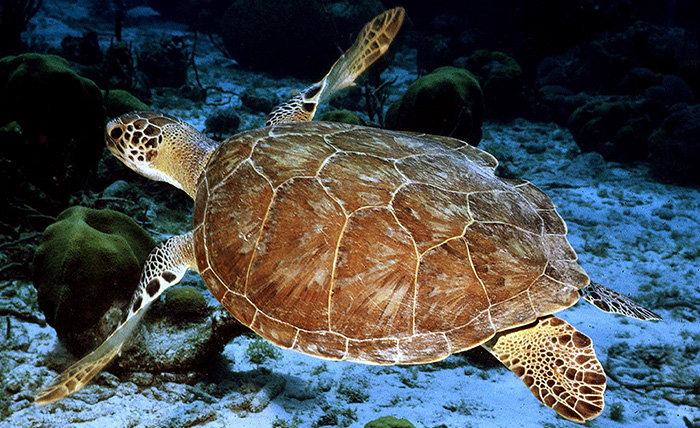
Green turtle, Chelonia mydas. Image courtesy of NOAA.
The diodes are the latest in a series of devices and modifications proposed for use by fishermen, and, in fact, are only the latest incarnation of net-illuminating gadgets. For example, one previous study found that green sea turtles tended to stay out of nets fitted with green light-emitting diodes (LEDs) and chemical lightsticks. The current study was conducted after researchers compared the visual ecology of sea turtles and fish and realized that the former were more sensitive to UV light than the latter. Though it seemed likely that use of UV lights could keep turtles away from nets without also warning off fish, the only way to test this theory was to deploy the devices in the field.

The researchers performed separate experiments (both in Mexico) in order to test their two hypotheses. The first experiment, conducted in a turtle-rich area known as Punta Abreojos, sought to determine whether the UV LEDs really did reduce sea turtle capture rates. Pairs of nets--one fitted with active LEDs and the other fitted with bulbs that weren't turned on--were deployed between sunset and sunrise. The researchers checked the nets every 90 minutes in order to retrieve, measure, and tag any turtles that had become ensnared. The second experiment, conducted in a commercial fishery in Bahia de los Angeles, was designed to investigate whether the LED devices affected fish capture. This part of the study used a paired-net design similar to that described above, only the nets were about four times as large and were left undisturbed all night. The next morning, all captured fish were retrieved and categorized as target species, bycatch, or "other" (e.g., kept by the fishermen as food or bait).

How a gillnet works. Image courtesy of the AFMA.

Of 332 green turtles captured during the first part of the study, only 123 (37%) were from UV-illuminated nets; the remaining 209 were captured from the nets without diodes. Although 123 is a sizeable number, the difference between lit and unlit nets was significant, indicating that use of these BRTs could substantially reduce turtle bycatch rates. Results from the second part of the study were similarly encouraging. Unlit nets only caught 46 more target fish than those fitted with UV lights (355 vs. 309); likewise, both types of net yielded catches with comparable average market values ($15.10 vs. $15.00).

These findings appear to be an excellent first step in the development and eventual distribution of a new turtle-deterring device. The UV LEDs may be improved by further behavioral studies exploring just how they work. In particular, it would be interesting to know whether turtles are avoiding the LEDs themselves, or whether the UV rays help the turtles see the fishing nets better. It will also be necessary to perform additional work that combines the two parts of this study into a single experiment; by choosing a field site that is both a commercial fishery and an area of high turtle density, scientists can investigate whether these BRTs are a practical solution to the problem of turtle bycatch.

Light-emitting diodes, or LEDs. Image courtesy of Instructables.
The authors of the study also point out that the current results may not be applicable to all fisheries, since different types of target fish have different visual abilities. Thus, the UV LEDs may work better in some sites than in others. Local conditions, such as time of day and turbidity of the water, may also affect the efficacy of the devices. While some tweaking may be necessary before the LEDs can be widely distributed, these preliminary findings suggest that the future of the apparati may be bright.

---
You can also follow Anthrophysis on Facebook and Twitter.

Wang, J., Barkan, J., Fisler, S., Godinez-Reyes, C., and Swimmer, Y. 2013. Developing ultraviolet illumination of gillnets as a method to reduce sea turtle bycatch. Biology Letters 9(5), online advance publication.